Explore the ultimate guide to animals to see in safari in Tanzania — from Big Five icons to rare endangered species. Discover wildlife, habitats, conservation, and luxury safari experiences with Epic Horizons Adventurehttps://www.epichorizonsadventures.com/our-tours/destinations/
Tanzania stands as one of the most iconic safari destinations in the world, home to legendary wildlife migrations, pristine ecosystems, and some of Africa’s most untouched wilderness areas. From the endless plains of Serengeti to the misty Ngorongoro Crater, Tanzania offers travelers the rare opportunity to witness wildlife in its most natural, dramatic, and breathtaking forms. Whether you are a first-time safari traveler or a seasoned explorer, understanding the incredible diversity of animals to see in safari in Tanzania will elevate your experience and help you appreciate the ecological richness of this extraordinary country.
Tanzania is home to over 430 mammal species, more than 1,100 bird species, countless reptiles, amphibians, insects, and marine animals, and some of the most iconic wildlife spectacles on Earth. The Great Wildebeest Migration alone involves more than 1.5 million wildebeest, 200,000 zebras, and thousands of gazelles moving across the Serengeti-Mara ecosystem annually. But Tanzania’s wildlife experience extends far beyond this famous migration — it includes rare species like wild dogs, black rhinos, shoebill storks, and tree-climbing lions, alongside abundant populations of elephants, giraffes, hippos, and predators.
This comprehensive guide explores the animals to see in safari in Tanzania in deep detail — not just listing species, but explaining where to find them, how they behave, why they matter ecologically, and how travelers can experience them ethically and responsibly. This article is designed both for travelers planning safaris and for tourism businesses looking to create authoritative, search-engine-optimized content that ranks highly on Google while providing genuine value to readers.
At Epic Horizons Adventure, we believe safaris should go beyond sightseeing. As our company philosophy states:
Epic horizons Adventure we are looking extra miles to make sure…. every guest experiences wildlife in a way that is meaningful, responsible, luxurious, and unforgettable.
Throughout this guide, we will also include trusted external references from conservation organizations, national park authorities, and wildlife research institutions to ensure factual accuracy and credibility.
Let us begin this journey into Tanzania’s wildlife kingdom.
🦁 Big Five Animals – The Ultimate Safari Icons of Tanzania

The Big Five — lion, leopard, elephant, buffalo, and rhinoceros — are the cornerstone of African safari tourism. Originally coined by big-game hunters as the five most dangerous animals to hunt on foot, today the term symbolizes conservation success, wildlife tourism, and the ultimate safari achievement. Tanzania is one of the very few countries in Africa where travelers can reliably encounter all five species in their natural habitats, often within a single safari circuit.
When people search for Animals to see in safari in Tanzania, the Big Five dominate curiosity — and rightly so. These species not only represent raw power and beauty but also reflect Tanzania’s ecological diversity, from savannah grasslands and riverine forests to volcanic highlands and dense bushveld.
Epic horizons Adventure we are looking extra miles to make sure…. every safari guest encounters the Big Five responsibly, with expert guides, ethical wildlife practices, and immersive experiences that connect travelers deeply with nature.
Let us explore each Big Five animal in exceptional depth.
🦁 African Lion – The King of the Savanna
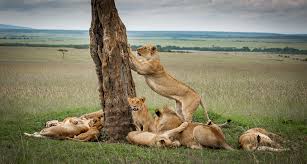
The African lion (Panthera leo) is arguably the most iconic animal in Tanzania’s wilderness. Known as the “King of the Jungle” (despite lions actually living on savannahs), these apex predators symbolize strength, social complexity, and ecological balance.
Distribution in Tanzania
Tanzania hosts Africa’s largest lion population, estimated at over 15,000 individuals, nearly half of all lions remaining on the continent. Major strongholds include:
- Serengeti National Park
- Ngorongoro Conservation Area
- Ruaha National Park
- Selous/Nyerere National Park
- Katavi National Park
(Source: https://www.panthera.org/cat/lion)
Behavior and Social Structure
Unlike other big cats, lions live in prides, which may include up to 30 individuals, typically consisting of related females, their cubs, and a coalition of males. Females perform most of the hunting, while males defend territory against rival coalitions.
Hunting typically occurs at dawn, dusk, or night, with cooperative strategies used to isolate prey such as wildebeest, zebra, buffalo, and occasionally giraffe calves or young elephants. Lions rely heavily on stealth and teamwork rather than speed.
Ecological Importance
As apex predators, lions regulate herbivore populations, preventing overgrazing and maintaining healthy grassland ecosystems. Their presence indicates ecological stability, and their decline often signals environmental degradation.
Best Places to See Lions
- Serengeti National Park: Known for massive prides and frequent hunting encounters.
- Ngorongoro Crater: Dense lion population due to enclosed ecosystem.
- Ruaha National Park: Famous for some of East Africa’s largest lion prides.
(Source: https://www.tanzaniaparks.go.tz/national_parks/serengeti)
Conservation Challenges
Lions face threats from habitat loss, prey depletion, retaliatory killings by pastoralists, and genetic isolation. Tanzania plays a vital role in global lion conservation through protected areas and community conservation programs.
Organizations such as Panthera and African Wildlife Foundation work extensively in Tanzania to protect lion habitats and promote coexistence with local communities:
🐆 Leopard – The Phantom of the Bush
The leopard (Panthera pardus) is perhaps Africa’s most elusive and mysterious big cat. Solitary, nocturnal, and masterful climbers, leopards thrive in a wide range of habitats — from dense forests to open savannahs — making Tanzania one of the best countries in Africa for leopard sightings.
Distribution in Tanzania
Leopards are widespread across Tanzania’s national parks, especially:
- Serengeti National Park
- Lake Manyara National Park
- Ruaha National Park
- Tarangire National Park
- Selous/Nyerere National Park
Hunting and Adaptability
Leopards are ambush predators, relying on stealth and camouflage. They prey on everything from rodents and birds to antelope and monkeys. Their signature behavior — dragging prey into trees — protects kills from scavengers such as hyenas and lions.
This adaptability allows leopards to survive in varied ecosystems and even near human settlements, though habitat fragmentation increasingly threatens their populations.
Behavioral Mystique
Leopards are solitary animals except during mating or when mothers raise cubs. Each individual maintains a territory marked by scent, scratch marks, and vocalizations. Their elusive nature makes sightings particularly special, often occurring at dusk or dawn.
Best Places to See Leopards
- Serengeti Central Valley: Known for high leopard densities.
- Lake Manyara: Tree-climbing leopards are occasionally spotted here.
- Ruaha: Offers some of the best leopard sightings in southern Tanzania.
(Source: https://www.iucnredlist.org/species/15954/163991139)
Conservation Status
Leopards are listed as Vulnerable on the IUCN Red List due to habitat loss, human conflict, and illegal hunting for skins. Tanzania’s extensive protected areas offer critical refuge for this species, but continued conservation investment is essential.
🐘 African Elephant – The Gentle Giant
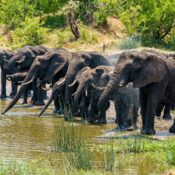
The African bush elephant (Loxodonta africana) is the largest land mammal on Earth, with adult males weighing up to 6,000 kg (13,000 lbs). Tanzania hosts some of Africa’s largest elephant populations and plays a crucial role in continental elephant conservation.
Distribution in Tanzania
Elephants roam across:
- Tarangire National Park
- Serengeti National Park
- Ruaha National Park
- Nyerere (Selous) National Park
- Katavi National Park
(Source: https://www.worldwildlife.org/species/african-elephant)
Social Structure
Elephants live in matriarchal family units led by the oldest female, whose knowledge of migration routes, water sources, and dangers is vital for survival. Males leave the herd upon reaching adolescence and form loose bachelor groups or roam alone.
Elephants communicate through vocalizations, infrasound, body language, and touch, demonstrating extraordinary emotional intelligence and social bonding.
Ecological Role
Elephants are keystone species — they shape landscapes by knocking down trees, dispersing seeds, digging water holes, and creating pathways used by other animals. Without elephants, many ecosystems would fundamentally change.
Best Places to See Elephants
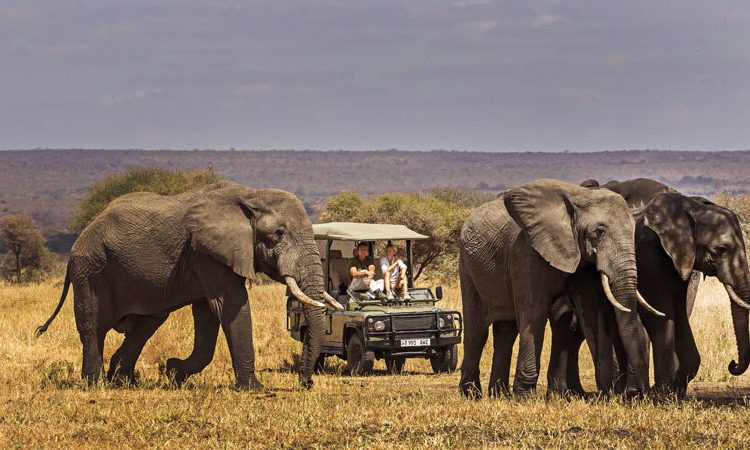
- Tarangire National Park: Famous for massive elephant herds, especially during dry season.
- Ruaha National Park: Hosts some of Tanzania’s largest elephant populations.
- Nyerere National Park: Known for elephants in riverine forests and open plains.
(Source: https://www.tanzaniaparks.go.tz/national_parks/tarangire)
Conservation Challenges
Poaching for ivory remains a significant threat despite international bans. Habitat loss and human-elephant conflict also endanger populations. Tanzania has made major strides in anti-poaching enforcement, reducing elephant poaching by over 60% since 2015.
(Source: https://www.unep.org/news-and-stories/story/tanzania-elephants-make-comeback)
🐃 African Buffalo – The Black Death of the Savanna
The African buffalo (Syncerus caffer) is often considered the most dangerous animal in Africa due to its unpredictable temperament and formidable strength. Buffalo are massive bovines with curved horns forming a protective boss across the forehead, capable of repelling lions and other predators.
Distribution in Tanzania
Buffalo thrive in:
- Serengeti National Park
- Katavi National Park
- Ruaha National Park
- Selous/Nyerere National Park
- Ngorongoro Conservation Area
Behavior and Herd Structure
Buffalo live in herds ranging from a few dozen to several thousand individuals. Herds are highly protective of calves and injured members, sometimes charging predators or threats in coordinated defense.
Older bulls may form bachelor groups or become solitary “dagga boys,” often found wallowing in mud near water sources.
Ecological Role
Buffalo graze on coarse grasses that other herbivores avoid, helping maintain grassland diversity and reducing fire risk. They also serve as a major prey species for lions and hyenas.
Best Places to See Buffalo
- Serengeti Plains: Massive herds during migration.
- Katavi National Park: Famous for enormous buffalo congregations at shrinking waterholes.
- Ngorongoro Crater: Dense populations year-round.
(Source: https://www.africanwildlife.org/wildlife-guide/mammals/african-buffalo)
Conservation Status
Buffalo populations are relatively stable in Tanzania thanks to extensive protected habitats, though disease transmission to livestock and habitat encroachment remain concerns.
🦏 Rhinoceros – The Most Endangered Giant
Tanzania is one of the few countries where both black rhinos (Diceros bicornis) and white rhinos (Ceratotherium simum) can be found, though both species remain critically endangered due to poaching for horns.
Distribution in Tanzania
Rhinos are found mainly in:
- Ngorongoro Conservation Area
- Serengeti National Park (reintroduced populations)
- Protected sanctuaries and conservancies
(Source: https://www.savetherhino.org/rhino-info/where-rhinos-live/africa/tanzania/)
Behavior and Ecology
Black rhinos are browsers, feeding on shrubs and woody vegetation, while white rhinos are grazers, preferring grasses. Both species are mostly solitary except mothers with calves.
Despite their bulk, rhinos can run at speeds exceeding 50 km/h (30 mph) and possess keen hearing and smell, though relatively poor eyesight.
Conservation Efforts
Tanzania has invested heavily in rhino protection through armed patrols, tracking systems, translocation programs, and community involvement. Ngorongoro Crater is now one of East Africa’s most successful black rhino conservation areas.
(Source: https://www.ngorongorocrater.org/wildlife)
Why the Big Five Define Safari in Tanzania
The Big Five represent more than just iconic wildlife — they embody conservation success, ecological complexity, and Africa’s untamed spirit. Tanzania’s commitment to wildlife protection has ensured that future generations can continue experiencing these magnificent animals in the wild.
For travelers researching Animals to see in safari in Tanzania, encountering the Big Five remains one of the most powerful and unforgettable wildlife experiences on Earth.
Epic horizons Adventure we are looking extra miles to make sure…. every Big Five sighting is ethical, educational, and transformative — guided by expert naturalists, sustainable practices, and immersive safari experiences.
🐘 Section 2: Herbivores of Tanzania – Giants, Grazers, and Grazing Dynasties
While predators often steal the spotlight, Tanzania’s herbivores form the foundation of the entire savannah ecosystem. Without herbivores, predators would not survive, grasslands would overgrow, fire cycles would change, and biodiversity would collapse. Tanzania hosts some of the richest herbivore diversity on Earth — from towering giraffes and lumbering hippos to delicate gazelles and ancient-looking wildebeest.
For anyone researching Animals to see in safari in Tanzania, understanding herbivores is essential because they dominate safari sightings numerically and ecologically. The Serengeti ecosystem alone supports more than 3 million large mammals, most of them herbivores — making it the largest remaining terrestrial mammal migration on the planet.
Epic horizons Adventure we are looking extra miles to make sure…. every safari guest learns not just to recognize herbivores but to understand their behavior, migration patterns, ecological roles, and conservation challenges.
Let us explore Tanzania’s most important herbivore species in detail.
🦒 Giraffe – The Tallest Animal on Earth
The giraffe (Giraffa camelopardalis) is the tallest land mammal, with adult males reaching heights of up to 5.5 meters (18 feet). Tanzania is home to the Masai giraffe subspecies, known for its jagged, irregular coat patterns.
Distribution in Tanzania
Giraffes are commonly found in:
- Serengeti National Park
- Tarangire National Park
- Lake Manyara National Park
- Ruaha National Park
- Arusha National Park
(Source: https://www.giraffeconservation.org/giraffe-facts/)
Feeding Behavior
Giraffes browse primarily on acacia leaves, using their long necks and prehensile tongues — up to 45 cm long — to strip leaves from thorny branches. This feeding niche allows them to exploit food sources inaccessible to other herbivores, reducing competition.
Social Structure
Giraffes live in loose social groups called “towers,” with individuals constantly joining and leaving. Mothers form nursery groups where calves socialize and receive collective protection.
Ecological Role
Giraffes contribute to seed dispersal, prune trees, and shape woodland structure. Their browsing patterns influence vegetation growth and habitat composition.
Conservation Status
Masai giraffes are classified as Endangered due to habitat loss, poaching, and civil unrest in some parts of their range. Tanzania plays a key role in their survival through protected habitats.
(Source: https://www.iucnredlist.org/species/9194/51140239)
🦓 Zebra – The Striped Nomads of the Plains
Zebras are among the most recognizable animals in Africa, with bold black-and-white stripes unique to each individual — much like fingerprints. Tanzania hosts both plains zebras (Equus quagga) and the rarer Grevy’s zebra (Equus grevyi), though plains zebras dominate safari sightings.
Distribution in Tanzania
Zebras thrive across:
- Serengeti National Park
- Tarangire National Park
- Ngorongoro Conservation Area
- Lake Manyara National Park
- Ruaha National Park
(Source: https://www.worldwildlife.org/species/plains-zebra)
Migration Behavior
Zebras play a vital role in the Great Migration, often moving ahead of wildebeest. Their powerful incisors allow them to graze on tough grasses, clearing the way for wildebeest, which prefer shorter, more tender grass.
Social Structure
Zebras form stable family units consisting of a stallion, several mares, and their offspring. These units aggregate into massive herds during migration.
Predator Avoidance
Zebras rely on group vigilance, speed, and confusion effects created by their stripes, which may disorient predators during chases.
🐃 Wildebeest – The Engines of the Great Migration
The wildebeest (Connochaetes taurinus), also known as the gnu, is the most numerous large mammal in Tanzania and the primary driver of the Great Migration. Over 1.5 million wildebeest traverse the Serengeti ecosystem annually in search of fresh grazing and water.
Distribution in Tanzania
Wildebeest dominate:
- Serengeti National Park
- Ngorongoro Conservation Area
- Maswa Game Reserve
- Loliondo Game Controlled Area
(Source: https://www.nationalgeographic.com/animals/mammals/facts/wildebeest)
Migration Cycle
The Great Migration follows a roughly circular route:
- January–March: Calving season in southern Serengeti.
- April–May: Movement northwest toward central Serengeti.
- June–July: River crossings at Grumeti River.
- August–October: Mara River crossings into Kenya.
- November–December: Return south with short rains.
This migration is driven by rainfall patterns and grass nutrient cycles, creating one of the greatest natural spectacles on Earth.
Ecological Impact
Wildebeest grazing stimulates grass growth, fertilizes soils through dung, and supports predators and scavengers. Their movement patterns shape the entire Serengeti ecosystem.
🦛 Hippopotamus – Lords of the Rivers
The hippopotamus (Hippopotamus amphibius) is Africa’s third-largest land mammal and among the most dangerous animals on the continent due to its territorial aggression in water.
Distribution in Tanzania
Hippos thrive in:
- Serengeti National Park (Grumeti and Mara Rivers)
- Ruaha National Park
- Selous/Nyerere National Park
- Katavi National Park
- Lake Manyara National Park
(Source: https://www.worldwildlife.org/species/hippopotamus)
Behavior
Hippos spend most daylight hours submerged in rivers and lakes to regulate body temperature, emerging at night to graze on grasses — often traveling several kilometers inland.
Despite their bulky appearance, hippos can run up to 30 km/h (19 mph) on land and are highly territorial in water.
Ecological Role
Hippos transport nutrients from land to water via dung, fertilizing aquatic ecosystems and supporting fish populations. Their trails create water channels and grazing corridors used by other animals.
🐃 Antelope Species – Tanzania’s Grazing Diversity
Tanzania hosts more than 35 antelope species, making it one of Africa’s richest countries for antelope diversity. These include:
- Impala (Aepyceros melampus)
- Grant’s gazelle (Nanger granti)
- Thomson’s gazelle (Eudorcas thomsonii)
- Topi (Damaliscus lunatus)
- Eland (Taurotragus oryx)
- Kudu (Tragelaphus strepsiceros)
- Sable antelope (Hippotragus niger)
(Source: https://www.africanwildlife.org/wildlife-guide/mammals/antelopes)
Each species occupies a unique ecological niche, feeding on different plant types and heights, which minimizes competition and maximizes biodiversity.
Eland – The Largest Antelope
Eland are massive, weighing up to 900 kg (2,000 lbs), yet are surprisingly agile jumpers. They inhabit savannah woodlands and open plains, especially in Tarangire, Serengeti, and Ruaha.
Gazelles – The Speed Specialists
Thomson’s gazelles can sprint at speeds exceeding 80 km/h (50 mph), making them among Africa’s fastest animals. Their speed and agility are key survival adaptations against predators like cheetahs.
Kudu and Bushbuck – Masters of Camouflage
These antelopes inhabit woodland and forest habitats, relying on camouflage, stealth, and leaping ability to evade predators.
🐘 Elephant and Herbivore Interactions
Elephants shape landscapes by uprooting trees, creating open grasslands that benefit grazers such as zebras, wildebeest, and buffalo. Conversely, grazers stimulate grass regrowth that benefits browsers like giraffes and kudu. This interdependence highlights the complexity and balance of Tanzania’s ecosystems.
Conservation of Herbivores in Tanzania
Herbivores face threats from habitat fragmentation, illegal hunting (bushmeat trade), climate change, and competition with livestock. Tanzania addresses these challenges through:
- Expanding protected areas
- Community conservation programs
- Anti-poaching initiatives
- Wildlife corridors connecting ecosystems
(Source: https://www.awf.org/where-we-work/tanzania)
Why Herbivores Define Safari in Tanzania
While predators excite, herbivores dominate landscapes and drive ecological processes. Watching thousands of wildebeest thunder across the plains, giraffes browsing acacia trees at sunset, or elephants bathing in rivers defines the essence of safari.
For anyone researching Animals to see in safari in Tanzania, herbivores provide constant wildlife encounters, photographic opportunities, and educational insights into nature’s balance.
Epic horizons Adventure we are looking extra miles to make sure…. every guest appreciates herbivores not just as prey species but as ecosystem engineers essential to Tanzania’s wilderness heritage.
🐆 Section 3: Carnivores of Tanzania – Predators, Strategy, and Survival
Carnivores embody the drama, tension, and raw intensity that define the African safari experience. Tanzania’s predators are among the most diverse, abundant, and behaviorally fascinating on Earth. From lion prides coordinating hunts across golden plains to solitary leopards stalking prey in moonlit forests and cheetahs sprinting at breathtaking speeds, Tanzania offers unmatched predator viewing opportunities.
For travelers researching Animals to see in safari in Tanzania, carnivores often top the wishlist. Their presence signals ecological health, shapes prey populations, and sustains biodiversity through natural selection.
Epic horizons Adventure we are looking extra miles to make sure…. every predator encounter is not only thrilling but also educational — revealing the ecological strategies, evolutionary adaptations, and conservation challenges that define carnivore survival in Africa’s wild landscapes.
Let us explore Tanzania’s carnivore kingdom in exceptional depth.
🦁 Lion – Apex Predators of the Savanna
Although discussed in Section 1 as part of the Big Five, lions deserve deeper analysis as Tanzania’s dominant carnivores.
Population and Distribution
Tanzania hosts Africa’s largest lion population, estimated at over 15,000 individuals, primarily in:
- Serengeti National Park
- Ngorongoro Conservation Area
- Ruaha National Park
- Katavi National Park
- Selous/Nyerere National Park
(Source: https://www.panthera.org/cat/lion)
Hunting Strategy
Lions hunt cooperatively, using stealth, terrain, and group coordination to ambush prey. Females usually initiate hunts, flanking prey while others block escape routes. Most hunts occur at night or during cooler hours, when prey is less alert.
Common prey species include:
- Wildebeest
- Zebra
- Buffalo
- Giraffe calves
- Young elephants (rarely)
Social Hierarchy
Prides consist of related females and cubs, with males forming coalitions that defend territory and breeding rights. Dominant males face constant threats from rivals and often lose their position after 2–4 years, leading to infanticide of cubs sired by previous males — a harsh but natural reproductive strategy.
Ecological Role
Lions regulate herbivore populations, preventing overgrazing and maintaining ecosystem balance. They also support scavengers by leaving carcasses accessible to vultures, jackals, and hyenas.
🐆 Leopard – Masters of Stealth and Adaptation
Leopards thrive in Tanzania’s diverse habitats — from dense forests and rocky kopjes to open plains and riverine thickets. Their elusive nature makes sightings especially prized.
Distribution
Leopards are common in:
- Serengeti Central Plains
- Lake Manyara National Park
- Ruaha National Park
- Tarangire National Park
- Selous/Nyerere National Park
(Source: https://www.iucnredlist.org/species/15954/163991139)
Hunting Behavior
Leopards rely on ambush tactics, stalking prey silently before launching explosive attacks. Their powerful jaws allow them to kill animals much larger than themselves, often hoisting carcasses into trees to avoid competition from lions and hyenas.
Common prey includes:
- Impala
- Gazelles
- Bushbuck
- Monkeys
- Birds and reptiles
Adaptability
Leopards are perhaps Africa’s most adaptable big cats, surviving in habitats ranging from deserts to rainforests and even near human settlements. This adaptability has helped them persist despite widespread habitat loss.
🐆 Cheetah – The World’s Fastest Land Mammal
The cheetah (Acinonyx jubatus) is evolution’s masterpiece of speed, capable of reaching speeds over 110 km/h (70 mph) in short bursts. Tanzania is one of Africa’s best countries to observe cheetahs hunting in open plains.
Distribution in Tanzania
Cheetahs thrive primarily in:
- Serengeti National Park
- Ngorongoro Conservation Area
- Maswa Game Reserve
- Loliondo Controlled Area
(Source: https://www.cheetah.org/cheetah-facts/)
Hunting Strategy
Unlike other big cats, cheetahs hunt by day, relying on speed rather than stealth or strength. They stalk prey closely before launching high-speed chases lasting 20–30 seconds.
Preferred prey includes:
- Thomson’s gazelle
- Impala
- Young wildebeest
Because cheetahs lack the strength to defend kills against lions and hyenas, they eat quickly and often lose prey to competitors.
Social Structure
Female cheetahs are solitary except when raising cubs, while males form coalitions, often brothers, that increase hunting success and territorial defense.
Conservation Status
Cheetahs are listed as Vulnerable, with populations declining due to habitat fragmentation, genetic bottlenecks, and human conflict.
(Source: https://www.iucnredlist.org/species/219/50649567)
🐕 African Wild Dog – The Most Efficient Predator
The African wild dog (Lycaon pictus), also known as the painted wolf, is Africa’s most endangered carnivore and one of its most fascinating.
Distribution in Tanzania
Tanzania hosts one of East Africa’s largest remaining wild dog populations, found in:
- Ruaha National Park
- Nyerere National Park
- Selous Game Reserve
- Mikumi National Park
(Source: https://www.africanwildlife.org/wildlife-guide/mammals/african-wild-dog)
Hunting Strategy
Wild dogs hunt cooperatively in highly coordinated packs, achieving success rates over 80% — the highest of any large carnivore. They rely on endurance rather than ambush, chasing prey until it collapses from exhaustion.
Common prey includes:
- Impala
- Wildebeest calves
- Gazelles
- Small antelope
Social Structure
Wild dog packs are tightly bonded family units led by a dominant breeding pair. Unlike lions, subordinate members rarely breed, instead helping raise pups through cooperative care.
Conservation Challenges
Wild dogs face threats from habitat loss, disease transmission from domestic dogs, and persecution. Tanzania plays a critical role in their conservation due to large intact ecosystems in the south.
🐆 Spotted Hyena – The Ultimate Opportunist
The spotted hyena (Crocuta crocuta) is one of Africa’s most misunderstood animals, often stereotyped as scavengers. In reality, hyenas are powerful hunters capable of killing large prey and maintaining complex social hierarchies.
Distribution
Hyenas are widespread throughout:
- Serengeti National Park
- Ngorongoro Conservation Area
- Tarangire National Park
- Ruaha National Park
- Selous/Nyerere National Park
(Source: https://www.nationalgeographic.com/animals/mammals/facts/spotted-hyena)
Social Structure
Hyena clans can exceed 80 individuals and are matriarchal societies led by dominant females. Females are larger and more aggressive than males and inherit rank through maternal lineage.
Hunting and Scavenging
Hyenas hunt both cooperatively and individually, preying on wildebeest, zebras, antelope, and young buffalo. Their powerful jaws can crush bone, allowing them to consume carcasses completely — reducing waste and disease.
Ecological Role
Hyenas are essential ecosystem cleaners, removing carcasses and preventing disease spread. Their predation pressure also shapes herbivore behavior and movement patterns.
🐆 Smaller Carnivores – The Hidden Hunters
Tanzania’s ecosystems also support a wide array of smaller carnivores, including:
- Serval (Leptailurus serval)
- Caracal (Caracal caracal)
- African civet (Civettictis civetta)
- Genet cats
- Mongooses
- Jackals
(Source: https://www.africanwildlife.org/wildlife-guide/mammals)
Serval
Servals inhabit grasslands and wetlands, using their exceptional hearing to detect rodents underground before pouncing vertically with remarkable precision.
Caracal
Caracals are powerful, agile cats capable of leaping several meters into the air to catch birds mid-flight.
Jackals
Black-backed and side-striped jackals are opportunistic omnivores, scavenging carcasses, hunting small mammals, and feeding on fruit.
Crocodiles – Ancient Apex Aquatic Predators
The Nile crocodile (Crocodylus niloticus) is Africa’s largest reptile and among the planet’s most efficient ambush predators.
Distribution
Crocodiles inhabit:
- Serengeti rivers (Grumeti and Mara)
- Ruaha River
- Rufiji River in Nyerere National Park
- Lake Victoria
- Lake Tanganyika
(Source: https://www.worldwildlife.org/species/nile-crocodile)
Hunting Strategy
Crocodiles ambush prey at water crossings, dragging animals underwater to drown before dismembering them. During the Great Migration, river crossings provide dramatic predator-prey encounters between crocodiles and wildebeest.
Ecological Role
Crocodiles regulate aquatic prey populations and recycle nutrients through carcass consumption. Their nesting burrows also create microhabitats for other species.
Conservation of Carnivores in Tanzania
Carnivores face threats from habitat loss, human-wildlife conflict, retaliatory killings, disease, and declining prey populations. Tanzania addresses these challenges through:
- Wildlife corridors and protected areas
- Community-based conservation programs
- Predator-proof livestock enclosures
- Anti-poaching initiatives
(Source: https://www.awf.org/where-we-work/tanzania)
Why Carnivores Define Safari Drama
Carnivores provide the emotional intensity of safari — the thrill of the hunt, the suspense of stalking, and the raw beauty of survival. Observing predator-prey dynamics offers travelers deep insight into nature’s evolutionary processes.
For anyone searching for Animals to see in safari in Tanzania, carnivores remain the most sought-after wildlife encounters — delivering unforgettable moments etched into memory forever.
Epic horizons Adventure we are looking extra miles to make sure…. every carnivore sighting is safe, ethical, immersive, and guided by conservation-driven expertise.
🦅 Section 4: Birds, Reptiles, and Aquatic Life – Tanzania’s Hidden Wildlife Treasures
While mammals dominate safari imagery, Tanzania’s ecosystems teem with extraordinary birdlife, reptiles, amphibians, and aquatic species that often go unnoticed but contribute profoundly to biodiversity and ecological stability. Tanzania is one of Africa’s richest countries for bird diversity, boasting over 1,100 recorded bird species, alongside hundreds of reptile species, freshwater fish, and amphibians.
For travelers researching Animals to see in safari in Tanzania, understanding non-mammalian wildlife expands the safari experience from dramatic predator-prey encounters to intricate ecological webs, colorful avian displays, and ancient reptilian survival strategies.
Epic horizons Adventure we are looking extra miles to make sure…. every guest appreciates not just lions and elephants, but also the vibrant bird calls at dawn, the subtle movement of reptiles beneath foliage, and the dynamic aquatic life shaping Tanzania’s rivers, lakes, and wetlands.
Let us explore Tanzania’s hidden wildlife treasures in extraordinary depth.
🦅 Birds of Tanzania – Africa’s Avian Paradise
Tanzania ranks among Africa’s top birding destinations due to its diverse habitats — savannahs, wetlands, forests, mountains, lakes, and coastal zones — each supporting unique avifauna.
Bird Species Diversity
Tanzania hosts:
- Over 1,100 bird species
- More than 40 endemic species
- Hundreds of migratory birds from Europe and Asia
(Source: https://www.birdlife.org/countries/tanzania/)
This makes Tanzania ideal for both casual birdwatchers and serious ornithologists.
🦅 Birds of Prey – Raptors of the Sky
Tanzania’s skies are dominated by powerful raptors that regulate prey populations and maintain ecological balance.
Martial Eagle (Polemaetus bellicosus)
Africa’s largest eagle, capable of killing animals as large as small antelope. Found in Serengeti, Ruaha, and Tarangire.
(Source: https://www.africanwildlife.org/wildlife-guide/birds/martial-eagle)
African Fish Eagle (Haliaeetus vocifer)
Iconic for its haunting call, fish eagles inhabit lakes and rivers throughout Tanzania, feeding primarily on fish and water birds.
(Source: https://www.nationalgeographic.com/animals/birds/facts/african-fish-eagle)
Secretary Bird (Sagittarius serpentarius)
A unique raptor that hunts on foot, stomping snakes and small mammals across open plains, commonly seen in Serengeti and Ngorongoro.
(Source: https://www.iucnredlist.org/species/22696374/131941043)
🦩 Flamingos – Pink Jewels of the Rift Valley
Tanzania’s alkaline lakes host some of the largest flamingo congregations on Earth, especially during breeding and feeding seasons.
Key Locations
- Lake Natron: Primary breeding site for lesser flamingos.
- Lake Manyara: Seasonal feeding grounds.
- Lake Eyasi and Lake Magadi: Supporting populations.
(Source: https://www.worldwildlife.org/places/lake-natron)
Ecological Role
Flamingos feed on algae and microorganisms, maintaining water quality and supporting nutrient cycling within saline ecosystems.
🦜 Forest and Woodland Birds
Tanzania’s forests and woodlands support a diverse array of colorful and vocal species:
- Turacos
- Hornbills
- Bee-eaters
- Kingfishers
- Barbets
- Sunbirds
(Source: https://www.africanwildlife.org/wildlife-guide/birds)
Hornbills
Large birds with curved beaks and distinctive casque structures. They play vital roles in seed dispersal, maintaining forest regeneration.
Bee-eaters
Highly social, brightly colored birds that nest in colonies and feed on flying insects, particularly bees and wasps.
🐊 Reptiles of Tanzania – Survivors of Deep Time
Tanzania’s reptiles represent ancient evolutionary lineages adapted to harsh environments — from arid deserts and rocky outcrops to wetlands and forests.
🐊 Nile Crocodile – Apex Aquatic Predator
The Nile crocodile (Crocodylus niloticus) dominates Tanzania’s rivers and lakes.
Distribution
- Serengeti rivers
- Rufiji River in Nyerere National Park
- Ruaha River
- Lake Victoria
- Lake Tanganyika
(Source: https://www.worldwildlife.org/species/nile-crocodile)
Behavior
Crocodiles bask on riverbanks by day and hunt at night, ambushing prey at water crossings. Their powerful jaws exert over 5,000 pounds per square inch — among the strongest bite forces of any animal.
Ecological Role
Crocodiles regulate fish populations, recycle nutrients, and provide nesting sites that benefit other species.
🦎 Lizards and Geckos
Tanzania hosts dozens of lizard species, including:
- Agamas
- Skinks
- Monitor lizards
- Chameleons
- Geckos
(Source: https://www.africanwildlife.org/wildlife-guide/reptiles)
Monitor Lizards
Nile monitors grow over 2 meters long and inhabit rivers, lakes, and wetlands, feeding on fish, birds, eggs, and small mammals.
Chameleons
Tanzania’s forests host spectacular chameleon species capable of color change, projectile tongue feeding, and independent eye movement — evolutionary marvels of adaptation.
🐍 Snakes of Tanzania – Masters of Stealth
Tanzania is home to over 150 snake species, including both venomous and non-venomous varieties.
Common species include:
- Black mamba (Dendroaspis polylepis)
- Puff adder (Bitis arietans)
- Boomslang (Dispholidus typus)
- African rock python (Python sebae)
(Source: https://www.africanwildlife.org/wildlife-guide/reptiles/snakes)
Snakes regulate rodent populations and form an essential part of food webs. Though feared, snake bites are extremely rare for safari travelers due to professional guiding and avoidance behavior.
🐸 Amphibians – Environmental Indicators
Tanzania’s wetlands and forests support numerous frog and toad species that act as bioindicators of environmental health. Because amphibians are sensitive to pollution and climate change, their presence signals intact ecosystems.
(Source: https://www.iucnredlist.org/)
🐟 Aquatic Life – Fish, Invertebrates, and Freshwater Ecosystems
Tanzania’s rivers, lakes, and wetlands support extraordinary aquatic biodiversity.
Lake Victoria
Africa’s largest lake hosts over 500 fish species, many endemic cichlids adapted to specialized ecological niches.
(Source: https://www.worldwildlife.org/places/lake-victoria)
Lake Tanganyika
One of the deepest lakes on Earth, Lake Tanganyika contains some of the planet’s most diverse freshwater fish assemblages.
(Source: https://whc.unesco.org/en/list/118/)
Rufiji and Ruaha Rivers
These rivers sustain crocodiles, hippos, fish, amphibians, aquatic birds, and complex food webs supporting terrestrial wildlife.
🦆 Wetland Birds – Masters of Water and Air
Tanzania’s wetlands host abundant waterbirds:
- Pelicans
- Storks
- Herons
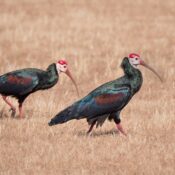
- Ibises
- Ducks
- Cranes
(Source: https://www.birdlife.org/countries/tanzania/)
Shoebill Stork (Balaeniceps rex)
One of Africa’s most sought-after bird species, found in swampy habitats of western Tanzania, especially near Lake Victoria wetlands.
(Source: https://www.africanwildlife.org/wildlife-guide/birds/shoebill)
🐢 Turtles and Tortoises
Tanzania supports both freshwater and terrestrial chelonian species.
- Leopard tortoise (Stigmochelys pardalis)
- African spurred tortoise (Centrochelys sulcata)
- Freshwater terrapins
(Source: https://www.iucnredlist.org/)
These reptiles play important roles in seed dispersal and vegetation control.
Ecological Importance of Non-Mammalian Wildlife
Birds pollinate plants, disperse seeds, regulate insects, and scavenge carcasses. Reptiles control rodent populations and contribute to nutrient cycling. Aquatic species support food webs linking terrestrial and aquatic ecosystems.
Together, these species sustain biodiversity, ecosystem resilience, and natural balance.
Conservation of Birds and Reptiles in Tanzania
Threats include:
- Habitat loss
- Wetland drainage
- Pollution
- Climate change
- Illegal wildlife trade
Tanzania protects biodiversity through:
- National parks and reserves
- Ramsar wetlands conservation
- Wildlife corridors
- Community-based conservation programs
(Source: https://www.ramsar.org/wetland/tanzania)
Why Birds and Reptiles Enrich Safari Experiences
While lions thrill, birds inspire. The iridescent flash of a lilac-breasted roller, the haunting call of a fish eagle, or the silent glide of a crocodile beneath murky waters adds layers of wonder and discovery to safari adventures.
For travelers seeking Animals to see in safari in Tanzania, embracing non-mammalian wildlife unlocks deeper understanding of Africa’s ecological complexity and evolutionary heritage.
Epic horizons Adventure we are looking extra miles to make sure…. every safari experience celebrates not only iconic mammals but the entire web of life that sustains Tanzania’s wilderness.
🌍 Section 5: Rare, Endemic, and Endangered Animals of Tanzania – Conservation and Responsible Safari Tourism
Tanzania is not only home to abundant wildlife but also harbors some of Africa’s rarest, most endangered, and most scientifically significant species. These animals — often elusive and highly specialized — represent fragile ecological treasures whose survival depends on conservation, responsible tourism, and community engagement.
For travelers researching Animals to see in safari in Tanzania, rare and endangered species offer deeply meaningful encounters — not only because they are difficult to find, but because observing them contributes to awareness, funding, and protection of vulnerable ecosystems.
Epic horizons Adventure we are looking extra miles to make sure…. every safari supports conservation, ethical wildlife practices, and sustainable tourism that benefits both wildlife and local communities.
Let us explore Tanzania’s most extraordinary rare and endangered animals, their habitats, conservation challenges, and how safari tourism helps protect them.
🦏 Black Rhinoceros – A Conservation Success Story in Progress
The black rhinoceros (Diceros bicornis) is critically endangered, with fewer than 6,500 individuals remaining worldwide.
Distribution in Tanzania
Tanzania hosts protected black rhino populations in:
- Ngorongoro Conservation Area
- Serengeti National Park
- Specially protected sanctuaries and breeding reserves
(Source: https://www.savetherhino.org/rhino-info/where-rhinos-live/africa/tanzania/)
Conservation Challenges
Poaching driven by illegal horn trade remains the greatest threat. Habitat loss and low reproductive rates also slow recovery.
Conservation Success
Tanzania has achieved major successes through:
- Armed ranger patrols
- GPS tracking and monitoring
- Translocation programs
- Community conservation partnerships
Ngorongoro Crater now hosts one of East Africa’s most secure black rhino populations.
(Source: https://www.ngorongorocrater.org/wildlife)
🐕 African Wild Dog – Africa’s Most Endangered Carnivore
African wild dogs (Lycaon pictus) are listed as Endangered, with fewer than 6,600 individuals remaining globally.
Distribution in Tanzania
Tanzania is one of Africa’s strongholds for wild dogs, found mainly in:
- Ruaha National Park
- Nyerere National Park
- Selous Game Reserve
- Mikumi National Park
(Source: https://www.africanwildlife.org/wildlife-guide/mammals/african-wild-dog)
Conservation Challenges
- Habitat fragmentation
- Disease transmission from domestic dogs
- Road mortality
- Human conflict
Conservation Efforts
Tanzania supports wild dog conservation through:
- Vaccination programs for domestic dogs
- Wildlife corridors
- Research and monitoring projects
- Community education initiatives
🦒 Masai Giraffe – The Endangered Giant
The Masai giraffe (Giraffa camelopardalis tippelskirchi) is classified as Endangered, with populations declining by over 50% in recent decades.
Distribution in Tanzania
- Serengeti National Park
- Tarangire National Park
- Ruaha National Park
- Arusha National Park
(Source: https://www.giraffeconservation.org/giraffe-facts/)
Conservation Threats
- Habitat loss
- Poaching
- Infrastructure development
Conservation Programs
Tanzania supports giraffe conservation through protected habitats, research initiatives, and community-based monitoring programs.
🦓 Grevy’s Zebra – Africa’s Rarest Zebra
Grevy’s zebra (Equus grevyi) is the most endangered zebra species, with fewer than 2,500 individuals remaining, primarily in Kenya. However, small populations persist in northern Tanzania.
(Source: https://www.worldwildlife.org/species/grevys-zebra)
🐆 Serval and Caracal – Rare Medium-Sized Cats
Though not globally endangered, servals and caracals are rarely seen due to nocturnal habits and declining habitat availability.
Serval (Leptailurus serval)
Found in wetlands and grasslands, servals use specialized hearing to hunt rodents.
Caracal (Caracal caracal)
Inhabits dry savannahs and rocky habitats, famous for aerial hunting skills.
(Source: https://www.africanwildlife.org/wildlife-guide/mammals)
🐵 Primates of Tanzania – Forest Guardians
Tanzania hosts several primate species, some endemic or endangered.
🐒 Chimpanzee (Pan troglodytes)
Chimpanzees inhabit western Tanzania’s forests near Lake Tanganyika, especially in:
- Gombe Stream National Park
- Mahale Mountains National Park
(Source: https://www.janegoodall.org/chimpanzees/)
Behavior
Chimpanzees live in complex social communities, use tools, hunt cooperatively, and display advanced cognitive abilities.
Conservation Status
Chimpanzees are Endangered, threatened by habitat loss, disease, and human encroachment.
🐒 Red Colobus Monkey (Piliocolobus spp.)
Red colobus monkeys inhabit forest canopies and are among Africa’s most endangered primates due to habitat destruction.
(Source: https://www.iucnredlist.org/)
🐒 Blue Monkey (Cercopithecus mitis) and Vervet Monkey (Chlorocebus pygerythrus)
Common throughout Tanzania’s forests and woodlands, these primates play roles in seed dispersal and insect population control.
🐦 Shoebill Stork – The Prehistoric Bird
The shoebill (Balaeniceps rex) is one of Africa’s most sought-after bird species, known for its massive shoe-shaped bill and prehistoric appearance.
Distribution
Found in wetland habitats of western Tanzania, especially near Lake Victoria and swampy floodplains.
(Source: https://www.africanwildlife.org/wildlife-guide/birds/shoebill)
Conservation Status
Listed as Vulnerable, threatened by wetland drainage, disturbance, and habitat loss.
🐢 Tortoises and Endemic Reptiles
Tanzania hosts endemic reptiles such as:
- Usambara chameleons
- Uluguru mountain reptiles
- Coastal forest geckos
These species are often restricted to small geographic ranges, making them highly vulnerable to habitat destruction.
(Source: https://www.iucnredlist.org/)
Marine Wildlife (Bonus Safari Extensions)
Though primarily a terrestrial safari destination, Tanzania’s coastline and islands offer extraordinary marine biodiversity.
Zanzibar and Mafia Island
These areas host:
- Whale sharks
- Dolphins
- Sea turtles
- Coral reef fish
- Dugongs (rare)
(Source: https://www.marineparks.go.tz/)
Marine safaris complement terrestrial wildlife experiences, offering travelers the opportunity to explore both land and sea ecosystems in a single destination.
Role of Responsible Safari Tourism in Conservation
Safari tourism funds:
- Anti-poaching operations
- Park management
- Wildlife research
- Community development
- Habitat restoration
Tourism revenue contributes directly to Tanzania’s conservation success and provides economic incentives for wildlife protection.
(Source: https://www.tanzaniaparks.go.tz/)
Community Conservation in Tanzania
Tanzania’s Wildlife Management Areas (WMAs) empower local communities to manage wildlife resources sustainably, generating income from tourism while protecting habitats.
(Source: https://www.awf.org/where-we-work/tanzania)
These programs reduce human-wildlife conflict, support education, healthcare, and infrastructure development, and foster coexistence between people and wildlife.
Ethical Wildlife Viewing and Photography
Responsible safari practices include:
- Maintaining safe viewing distances
- Avoiding animal disturbance
- Following park regulations
- Supporting eco-certified lodges
- Respecting wildlife behavior
Epic horizons Adventure we are looking extra miles to make sure…. every safari adheres to strict ethical standards that protect animals while maximizing guest experience and educational value.
Why Rare and Endangered Animals Define Tanzania’s Safari Legacy
Seeing a black rhino in Ngorongoro, a wild dog pack in Ruaha, or chimpanzees in Mahale is more than a wildlife sighting — it is a testament to conservation success, ecological resilience, and humanity’s capacity to protect Earth’s most vulnerable species.
For travelers researching Animals to see in safari in Tanzania, these rare encounters offer profound emotional connection, conservation awareness, and once-in-a-lifetime memories.
Epic horizons Adventure we are looking extra miles to make sure…. every journey contributes positively to conservation while delivering extraordinary safari experiences that transcend expectations.
🌟 Conclusion: Why Tanzania Offers the Greatest Wildlife Safari on Earth
Tanzania stands unmatched as Africa’s premier safari destination — not simply because of its iconic animals, but because of its scale, diversity, ecological integrity, and conservation success. From the thunder of wildebeest hooves across Serengeti plains to the silent glide of crocodiles beneath river surfaces, from the roar of lions at dusk to the whisper of flamingo wings above alkaline lakes, Tanzania delivers wildlife encounters in their purest, wildest form.
This guide has explored Animals to see in safari in Tanzania across five comprehensive dimensions:
- Big Five icons
- Herbivore giants and grazing dynasties
- Carnivore predators and survival strategists
- Birds, reptiles, and aquatic life
- Rare, endemic, and endangered species
Together, these categories represent one of the richest wildlife assemblages on Earth — supported by vast protected areas, community conservation initiatives, and responsible safari tourism.
At the heart of exceptional safari experiences stands expert guiding, ethical wildlife viewing, luxury comfort, and deep ecological understanding — values embodied by our company philosophy:
Epic horizons Adventure we are looking extra miles to make sure…. every safari becomes a transformative journey of discovery, connection, and conservation.
📌 SEO Meta Description (Optional for WordPress)
Explore the ultimate guide to animals to see in safari in Tanzania — from Big Five icons to rare endangered species. Discover wildlife, habitats, conservation, and luxury safari experiences with Epic Horizons Adventure.