Visiting a Maasai Village in Tanzania: Ultimate Cultural Experience 2026/2027 is one of the most memorable cultural experiences you can have when exploring East Africa. Tanzania is famous around the world for its wildlife, national parks, Mount Kilimanjaro, Zanzibar beaches, and the Great Wildebeest Migration, but there is another side of the country that deserves just as much attention. This is the human side of Tanzania, where local communities continue to protect traditions, stories, skills, and ways of life that have been passed from one generation to another.
For travelers planning Tanzania trips in 2026 and 2027, visiting a Maasai village in Tanzania offers a chance to slow down and experience something different from a traditional game drive. Instead of only watching wildlife from a safari vehicle, you have an opportunity to meet people, listen to their stories, learn about their daily lives, see traditional homes, experience music and dancing, and understand the importance of cattle and community in Maasai society.
A visit to a Maasai village is not simply about taking photographs. It can become a meaningful cultural exchange when it is planned and carried out respectfully. You are welcomed into a community, introduced to traditions, and given an opportunity to ask questions. At the same time, the community has the opportunity to share its culture and benefit from responsible tourism.
For visitors traveling with EPIC Horizons Adventures, a Maasai cultural experience can be combined with a Tanzania safari, Kilimanjaro adventure, or other northern Tanzania activities. This makes it possible to create a journey that includes wildlife, nature, culture, and local experiences instead of focusing on only one part of Tanzania.
Visiting a Maasai Village in Tanzania: Ultimate Cultural Experience 2026/2027.Why Is So Special?
Visiting a Maasai village in Tanzania is special because it allows travelers to experience a living culture rather than simply reading about it in a museum or history book. The Maasai are one of the best-known ethnic communities in East Africa, and their traditional lifestyle has become an important part of the cultural identity of northern Tanzania and southern Kenya.
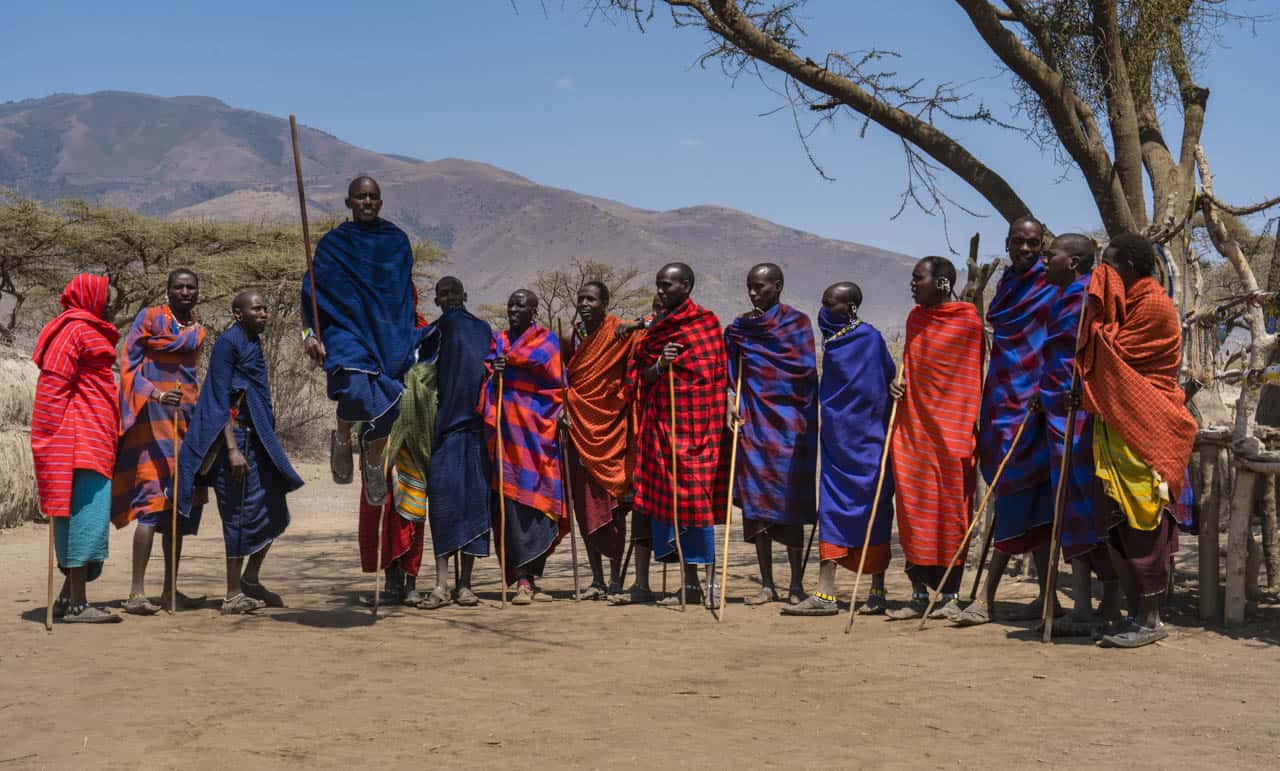
When you arrive at a Maasai village, the experience can feel very different from a normal tourist attraction. You may hear traditional songs, see community members dressed in colorful clothing and jewelry, watch traditional dances, and learn about how families organize their daily activities.
The experience also gives travelers a better understanding of the relationship between people, livestock, land, and wildlife. In many Maasai communities, cattle have traditionally played an important role in social and economic life. Livestock can provide food, wealth, social value, and a strong connection between families and their surroundings.
Visiting a Maasai village in Tanzania can also help you understand that Maasai communities are not frozen in the past. Modern Maasai families experience education, mobile phones, changing economic opportunities, tourism, modern healthcare, and other aspects of contemporary life. Some people continue traditional practices while also adapting to modern changes.
This mixture of tradition and modern life is one of the most interesting parts of a cultural visit.
Understanding the Maasai People Before Your Visit
Before visiting a Maasai village in Tanzania, it is helpful to understand that the Maasai are a diverse community. Not every Maasai family lives in exactly the same way, and traditions can vary from one community to another.
The Maasai are traditionally pastoralist people, meaning that livestock has historically played a major role in their way of life. Cattle, goats, and sheep are important animals within many Maasai communities. Livestock has traditionally influenced food, family life, social relationships, ceremonies, and wealth.
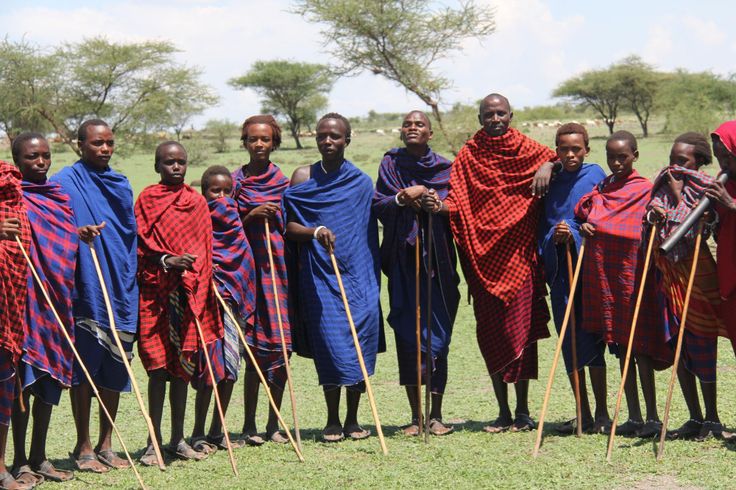
The Maasai are also known for their distinctive clothing. Bright colors such as red, blue, black, and other shades are often seen in traditional clothing and decorative beadwork. Beaded jewelry can have cultural and social meanings, and the skills involved in making these items are often passed between generations.
Language is another important part of the culture. Maa is traditionally spoken by the Maasai, while Swahili is widely used in Tanzania and English is commonly used in tourism and education. During a village visit, your local guide can help with communication and explain cultural details that may not be obvious to visitors.
Learning a few simple Swahili greetings before your visit can also make your experience more enjoyable. A friendly greeting can open the door to conversation and show that you have made an effort to connect with local people.
Visiting a Maasai Village in Tanzania: Ultimate Cultural Experience 2026/2027;The Traditional Maasai Village Experience
A traditional Maasai village experience can include several activities, depending on the community you visit and the type of cultural program offered.
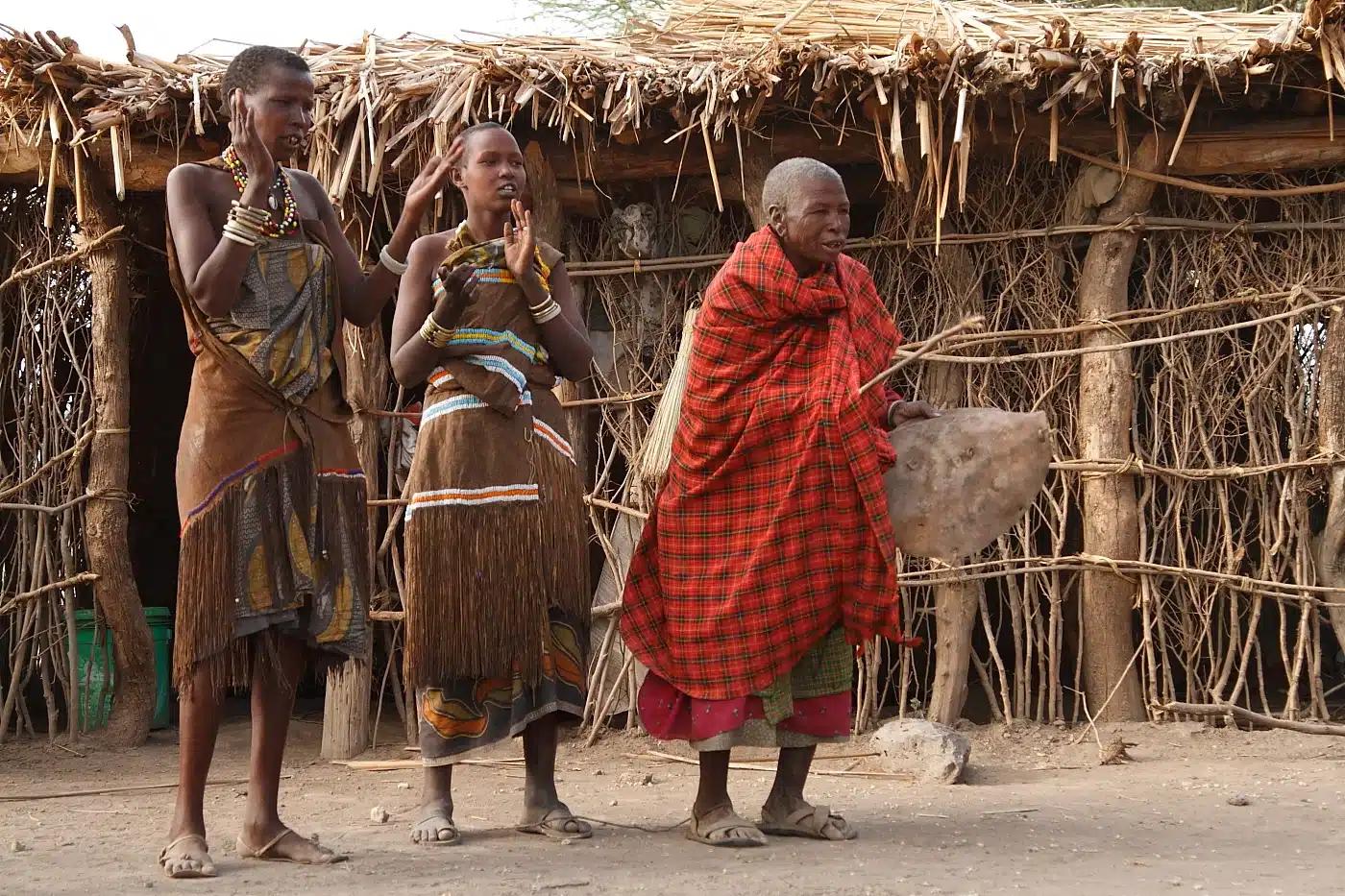
One of the first things visitors often notice is the traditional arrangement of the village. Some Maasai communities have homes built using locally available materials, including mud, sticks, grass, and other natural materials. These traditional houses are designed according to local knowledge and environmental conditions.
During a guided visit, community members may explain how the houses are built, who takes part in construction, and how families use the different spaces inside and around the home.
This is where visiting a Maasai village in Tanzania becomes much more meaningful than simply stopping for photographs. You can ask questions and understand the practical reasons behind traditional building methods.
You may also learn how livestock are managed. Cattle are often an important part of village life, and visitors may see animals being moved, cared for, or brought into protected areas.
Children may be playing nearby, adults may be working, and families may be carrying out their normal daily activities. However, it is important to remember that this is someone’s home and community. Visitors should behave respectfully and follow the instructions of their guide.
Traditional Maasai Dancing and Singing
One of the most recognizable parts of a Maasai cultural experience is traditional singing and dancing.
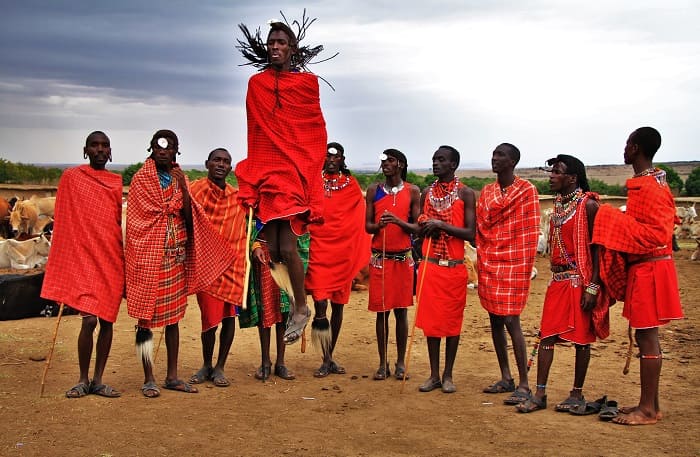
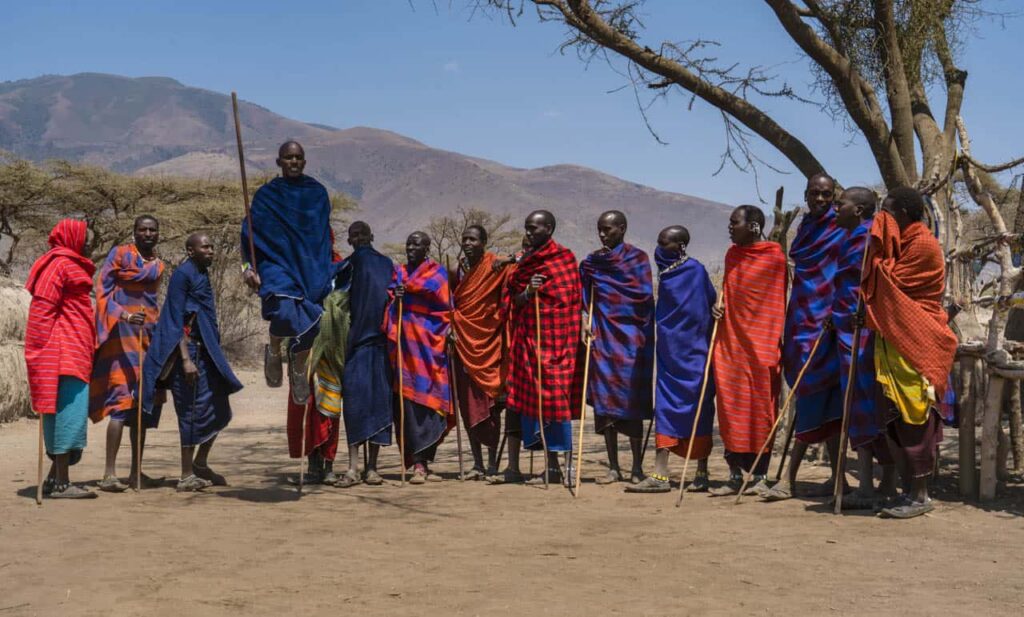
Visitors may be welcomed with songs performed by community members. Traditional dancing can involve rhythmic movement, singing, jumping, and coordinated group participation. The performance can be energetic and enjoyable, but travelers should understand that these traditions have cultural meaning beyond entertainment.
A good guide will explain what you are seeing instead of presenting it only as a tourist show.
In some cultural experiences, visitors may be invited to participate in dancing. If you are invited, it can be a fun opportunity to join the community, but you should always follow their lead and participate respectfully.
Photography is also possible in many village experiences, but permission should be requested before taking close-up photographs of individuals. A respectful approach makes the experience more comfortable for everyone.
Maasai Beadwork and Traditional Crafts
Another important part of visiting a Maasai village in Tanzania is learning about traditional crafts.
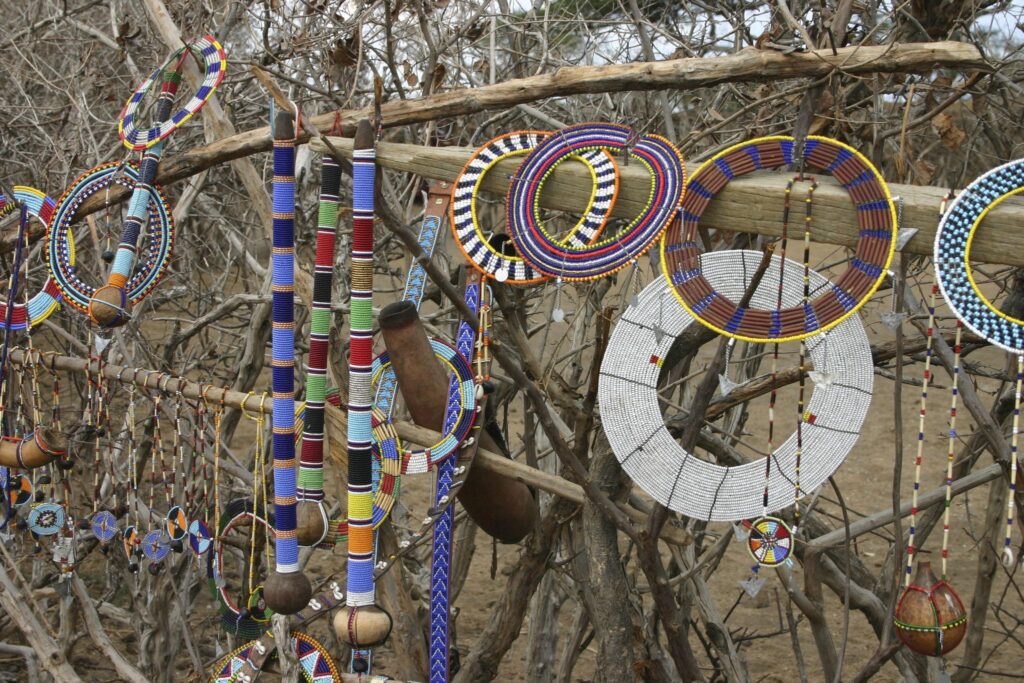
Maasai beadwork is widely recognized for its colorful patterns and detailed designs. Beaded necklaces, bracelets, earrings, decorations, and other handmade products may be created by local artisans.
For many communities, selling handmade crafts to visitors provides an additional source of income. Purchasing directly from local artisans can therefore be a meaningful way to support the community.
When buying souvenirs, consider choosing locally made products rather than mass-produced items. Ask about the meaning of the design, how the item was made, and who made it. You may discover that the piece you take home has a much more interesting story than a souvenir bought from an ordinary shop.
The experience also allows travelers to appreciate the patience and skill required to create handmade beadwork.
Learning About Traditional Maasai Homes
Traditional homes are one of the most interesting parts of visiting a Maasai village in Tanzania.
Depending on the community, you may be invited to enter a traditional house and learn how it is constructed. The design is practical and reflects generations of local knowledge.
A traditional Maasai home may be built using branches, mud, grass, and other locally available materials. The structure is designed to provide shelter while using resources that can be found in the surrounding environment.
Inside, the space may be simple, with areas used for sleeping, cooking, storage, and other household activities.
For a traveler accustomed to modern houses, this can provide an entirely different perspective on what is necessary for comfortable living.
The important lesson is not that one lifestyle is better than another. Instead, the experience shows how people can adapt their homes to their environment using knowledge and materials available to them.
Meeting Maasai Families
One of the most valuable parts of visiting a Maasai village in Tanzania is the opportunity to meet local people.
Travelers often arrive with questions about Maasai culture, family life, livestock, education, traditions, marriage, food, ceremonies, and modern changes. A respectful cultural visit gives you a chance to ask some of these questions directly.
Your guide can help explain which questions are appropriate and how to approach sensitive subjects.
Remember that Maasai people are individuals, not characters in a performance. Their lives are real, and their experiences can be different from the image sometimes presented in travel advertising.
Approaching the visit with curiosity rather than judgment can make the experience much more rewarding.
Instead of asking only, “What do Maasai people do traditionally?” you can also ask, “How is life changing for young people today?” or “How does education affect the community?” These questions can lead to deeper conversations about Tanzania today.
The Role of Cattle in Maasai Culture
Cattle have traditionally played a major role in Maasai society.
For many Maasai communities, livestock can represent wealth, food, social status, and family connections. Cattle may also be involved in important cultural and social events.
During visiting a Maasai village in Tanzania, you may hear stories about livestock ownership, herding, and the relationship between people and animals.
This is especially interesting for travelers who have already experienced a Tanzania safari. On safari, you may spend hours watching wild animals such as lions, elephants, giraffes, and zebras. In a Maasai community, you get to see another relationship between people and animals.
The experience helps demonstrate how livestock and wildlife can exist within the same broader landscape.
In northern Tanzania, communities and wildlife often share areas around major ecosystems. Understanding this relationship can give travelers a more complete picture of conservation and rural life.
Visiting a Maasai Village in Tanzania: Ultimate Cultural Experience 2026/2027;Maasai Culture and Wildlife Conservation
Visiting a Maasai village in Tanzania can also help visitors understand the connection between local communities and wildlife conservation.
Northern Tanzania contains some of Africa’s most important wildlife areas. The Serengeti, Ngorongoro area, Tarangire, Lake Manyara, and surrounding landscapes attract travelers from around the world.
But wildlife does not exist in isolation.
People live around these ecosystems, and local communities can be affected by wildlife, conservation policies, tourism, land use, and environmental changes.
Maasai communities have traditionally lived with livestock in landscapes that also support wild animals. This relationship is complex, and responsible tourism can help create opportunities for communities to benefit from visitors while encouraging respect for the environment.
When tourists spend money on local guides, cultural visits, crafts, food, transportation, or community projects, tourism can provide an economic reason to protect cultural heritage and natural landscapes.
What You Can Learn From a Maasai Village Visit
Visiting a Maasai village in Tanzania can teach travelers lessons that are difficult to learn from a normal safari.
You may learn about community cooperation, traditional knowledge, livestock management, local construction, food preparation, crafts, storytelling, music, and changing lifestyles.
You may also gain a better understanding of the importance of land and natural resources.
Perhaps the biggest lesson is that Tanzania is more than its famous attractions.
A safari can show you Tanzania’s wildlife.
A Kilimanjaro climb can show you Tanzania’s mountains.
A Zanzibar holiday can show you Tanzania’s beaches and coastal culture.
But visiting a Maasai village can help you understand Tanzania through the people who call the country home.
Visiting a Maasai Village in Tanzania With Respect
Respect should be at the center of every cultural experience.
Before visiting a Maasai village, ask your tour operator how the community visit is organized. Find out whether the community receives direct benefits from tourism and whether local people are involved in managing the experience.
During your visit, listen carefully to your guide and community hosts. Ask before taking photographs. Avoid entering private areas unless you are invited. Do not touch people’s belongings without permission.
It is also important to avoid treating people as tourist attractions.
A respectful traveler understands that cultural tourism should involve exchange rather than simply observation.
Your visit should leave the community feeling respected and valued.
Why 2026 and 2027 Are Excellent Years for a Maasai Cultural Experience
Travelers planning Tanzania holidays in 2026 and 2027 have many opportunities to combine cultural experiences with other adventures.
A Maasai village visit can easily become part of a larger northern Tanzania itinerary. You could combine it with a Serengeti safari, Ngorongoro Crater tour, Tarangire National Park, Lake Manyara, or a Mount Kilimanjaro trekking adventure.
This combination is particularly attractive for travelers who want more than wildlife viewing.
For example, you could spend several days exploring Tanzania’s national parks before visiting a Maasai village. After experiencing lions, elephants, giraffes, and the Great Migration landscape, you can spend time learning about the communities living in the same region.
This creates a more complete travel experience.
How to Prepare for Visiting a Maasai Village in Tanzania
Preparing for a Maasai village visit does not require complicated equipment.
Comfortable clothing is important because cultural visits can involve walking. Lightweight clothing is suitable for warm weather, while a light jacket may be useful during cooler mornings and evenings.
Comfortable walking shoes are also recommended.
Bring drinking water, sunscreen, sunglasses, a hat, and a camera or smartphone if you want to take photographs.
However, the most important thing to bring is an open mind.
Do not arrive expecting everything to look exactly like pictures you have seen online. Communities are different, and daily life changes over time.
Be ready to listen, ask questions, and learn.
The Best Attitude for Visiting a Maasai Village in Tanzania: Ultimate Cultural Experience 2026/2027
The best attitude is simple: come as a guest.
When you enter a Maasai village, remember that you are visiting a community with its own traditions, values, and daily routines.
You do not need to understand everything immediately.
Listen to explanations. Ask respectful questions. Smile. Participate when invited. Buy crafts if you genuinely like them. Take photographs only when appropriate.
Most importantly, avoid comparing the community negatively with your own lifestyle.
Cultural travel is about learning how different people live and understanding the reasons behind those differences.
Visiting a Maasai Village in Tanzania as Part of a Safari
A Maasai cultural visit can be added to many Tanzania safari programs.
For travelers arriving in Arusha or Moshi, it can be arranged before or after a safari depending on the route and schedule.
A typical northern Tanzania adventure may include Tarangire National Park, Lake Manyara, Ngorongoro Conservation Area, Serengeti National Park, and a Maasai cultural experience.
Each destination provides something different.
Tarangire is known for its elephants and large baobab trees.
Ngorongoro offers spectacular scenery and abundant wildlife.
Serengeti provides one of the most famous wildlife experiences in Africa.
A Maasai village offers a cultural experience that connects travelers with the people and traditions of the region.
Combining these experiences can create a balanced Tanzania holiday.
Visiting a Maasai Village in Tanzania: Ultimate Cultural Experience 2026/2027 Why Cultural Tourism Matters in Tanzania
Cultural tourism can play an important role in creating opportunities for local communities.
Tourism is not only about hotels, safari vehicles, and national parks. It also involves guides, drivers, artisans, cooks, cultural performers, community projects, farmers, and many other people.
When cultural tourism is organized responsibly, money can reach communities directly or indirectly.
This can support education, healthcare, local businesses, cultural programs, and household incomes.
For travelers, this means that a cultural visit can become more than an enjoyable activity. It can also contribute to the local economy.
However, travelers should ask their tour operators how community tourism is organized. Responsible tourism should aim to create fair and respectful relationships between visitors and communities.
The Human Side of Tanzania
One of the reasons Tanzania continues to attract travelers is its incredible diversity.
You can climb Mount Kilimanjaro in the morning, explore wildlife-rich landscapes during a safari, meet local communities, and later relax on the beaches of Zanzibar.
But behind all these attractions are people.
Visiting a Maasai village in Tanzania allows travelers to experience this human side of the country.
You may leave with photographs, handmade souvenirs, and memories of traditional dancing, but you can also leave with a better understanding of the people and communities that make Tanzania such a special destination.
That is what makes cultural tourism powerful.
Visiting a Maasai village in Tanzania is an experience that can add depth to your African adventure. It gives you the opportunity to meet local people, learn about traditions, understand traditional homes, see beadwork, experience music and dancing, and discover the importance of livestock and community life.
For travelers planning Tanzania trips in 2026 and 2027, this experience can be easily combined with a safari, Mount Kilimanjaro trek, or other northern Tanzania adventure.
The most important thing is to visit with respect.
Come ready to learn rather than judge. Listen instead of making assumptions. Ask before taking photographs. Support local crafts and community tourism where possible.
When approached in the right way, visiting a Maasai village in Tanzania becomes more than another activity on your itinerary. It becomes a personal connection with the people, traditions, and landscapes of Tanzania.
Visiting a Maasai Village in Tanzania: What Happens When You Arrive
Visiting a Maasai Village in Tanzania: Ultimate Cultural Experience 2026/2027 can be one of the most personal and interesting experiences during a Tanzania holiday. After traveling through the beautiful landscapes of northern Tanzania, arriving at a Maasai community gives you a different view of the country. Instead of spending your entire day looking for wildlife, you have time to meet people, listen to stories, learn about traditions, and understand how daily life works within the community.
When you arrive at a Maasai village, your local guide will normally introduce you to the community and explain what will happen during the visit. The exact experience can be different depending on the village and the cultural program you choose. Some communities offer guided walks around the village, traditional dancing, demonstrations of local crafts, explanations of traditional houses, discussions about livestock, and opportunities to purchase handmade products.
The welcome can be warm and lively. Traditional songs and dancing may form part of the greeting, and visitors may be invited to join in. This can feel very different from the normal beginning of a safari because you are not simply observing a landscape. You are entering a community and meeting people directly.
A good cultural experience should give you enough time to ask questions and interact naturally. You should not feel rushed from one activity to another. The purpose of visiting a Maasai village in Tanzania is to learn and connect, not simply to collect photographs.
Traditional Maasai Dancing and Singing
Traditional dancing is one of the activities most visitors look forward to when visiting a Maasai village in Tanzania. The songs and dances are an important part of Maasai cultural expression and can be connected to different social occasions and community traditions.
During a cultural visit, you may see a group of Maasai men, women, or young people singing together. The rhythm can be powerful and energetic. Some traditional dances involve coordinated movement and jumping, while singing creates a strong sense of unity within the group.
For many visitors, this is one of the most memorable moments of the entire experience.
You may also be invited to participate. If the community welcomes you to join, do not worry about getting every movement right. Simply follow their lead and enjoy the moment.
However, it is important to remember that traditional dancing is not just a performance created for tourists. It is part of a culture with meaning and history. Your guide can explain the context of what you are watching.
The experience becomes more meaningful when you understand what the songs and movements represent rather than simply seeing them as entertainment.
Visiting a Maasai Village in Tanzania and Learning About Traditional Clothing
Maasai clothing is one of the most recognizable features of Maasai culture. During your visit, you may see people wearing colorful fabrics and traditional jewelry.
Bright colors are often used in Maasai clothing, and red is especially well known. However, clothing styles can vary depending on the individual, age, occasion, location, and personal preference.
The traditional fabrics are often worn in ways that provide both cultural identity and practical protection from the environment.
For travelers, the colors can be visually impressive, especially when combined with traditional beadwork.
But there is more to Maasai clothing than appearance.
Your guide or community host may explain how different types of clothing and jewelry are used and how styles can communicate aspects of identity and social life.
This is another reason why visiting a Maasai village in Tanzania is different from simply seeing Maasai people in photographs. You can ask questions and hear explanations directly from people who understand the culture.
Maasai Beadwork and Handmade Jewelry
One of the most fascinating activities during visiting a Maasai village in Tanzania is learning about beadwork.
Maasai beadwork is traditionally made by hand, and colorful beads can be arranged into detailed patterns. Necklaces, bracelets, earrings, belts, decorations, and other items may be available.
In many communities, women have played an important role in beadwork and craft production. Making and selling these products can provide income for families and communities.
When you purchase handmade jewelry or crafts directly from local artisans, you are not only buying a souvenir. You are also supporting a local skill and a small-scale economic activity.
Before purchasing something, take time to ask about the item. Find out who made it, how long it took, and whether there is a particular meaning behind the design.
You may discover that the story behind the item is more valuable than the object itself.
Visiting a Traditional Maasai House
Another important part of visiting a Maasai village in Tanzania is seeing a traditional Maasai house.
Traditional Maasai homes are often built using natural materials found in the local environment. Depending on the community, construction may involve sticks, mud, grass, and other locally available materials.
The construction process requires knowledge and skill.
Inside, the house may appear small and simple compared with modern homes, but the design reflects the needs and environment of the people who use it.
A guide may explain how different areas are used for sleeping, cooking, storage, or other household activities.
For many international travelers, this is a chance to think about how much modern life depends on technology, electricity, and manufactured materials.
The Maasai traditional house shows how local knowledge can provide practical solutions using resources available nearby.
Learning About Maasai Daily Life
Visiting a Maasai village in Tanzania can also introduce you to ordinary daily activities.
Depending on the community and time of your visit, you may see people caring for livestock, preparing food, making crafts, collecting water, cleaning homes, or carrying out other household activities.
Daily life is not always dramatic or exciting, and that is exactly what makes it valuable.
Travelers sometimes expect every cultural experience to involve a special ceremony or performance. However, observing ordinary life can provide a more realistic understanding of the community.
Your guide can explain which activities are traditional and which have changed over time.
This is important because Maasai communities, like every other community in Tanzania, are adapting to a changing world.
Modern education, smartphones, transportation, tourism, healthcare, business, and employment opportunities are influencing everyday life.
Therefore, visiting a Maasai village in Tanzania should not be viewed as stepping into the past. You are visiting people who maintain important traditions while also living in the modern world.
Maasai Food and Traditional Meals
Food is another way to understand culture.
During some Maasai cultural experiences, visitors may learn about traditional foods and cooking methods. What is available will depend on the community and the type of tour arranged.
Traditional Maasai diets have historically been strongly connected to livestock and available local resources. Milk and livestock products have traditionally played important roles in many Maasai communities, while other foods may vary depending on location and changing lifestyles.
Some cultural tours may offer visitors the opportunity to taste local food.
If food is included in your visit, approach it with an open mind. You do not need to love every dish, but trying local food can make the cultural experience more complete.
You can also ask questions about how the food is prepared, where the ingredients come from, and when particular foods are eaten.
Food often tells stories about geography, climate, history, and community life.
Learning About Livestock and Herding
Livestock is one of the most important subjects you may learn about when visiting a Maasai village in Tanzania.
Cattle, goats, and sheep have traditionally played major roles in Maasai communities. Herding requires knowledge of the environment, water sources, grazing areas, weather, and animal behavior.
During your visit, your guide may explain how livestock is cared for and how animals contribute to household life.
This can be especially interesting after a safari because you begin to see the landscape from another perspective.
On safari, you might look at grasslands and think about lions, zebras, wildebeest, elephants, or giraffes. A pastoralist community may look at the same landscape and think about water, grazing, livestock, homes, and family life.
Both perspectives are important for understanding Tanzania.
The Importance of Community
Community is an important part of the Maasai way of life.
During visiting a Maasai village in Tanzania, you may notice that many activities involve cooperation. Families and community members can have different responsibilities, and social relationships are important.
Traditional knowledge is often passed from older generations to younger people through daily life, stories, observation, and participation.
This is one reason why cultural tourism can be valuable. When visitors take time to listen to local people, they can learn about traditions that are difficult to understand through books alone.
The experience also reminds travelers that African culture is not one single culture. Tanzania has many ethnic communities, languages, traditions, foods, music styles, and histories.
The Maasai are one part of this rich cultural diversity.
Visiting a Maasai Village in Tanzania: Ultimate Cultural Experience 2026/2027;Maasai Storytelling and Oral Traditions
Storytelling has traditionally been an important way of sharing knowledge.
During a cultural experience, you may have an opportunity to listen to stories about community history, traditions, wildlife, livestock, family life, or the environment.
Oral traditions can help preserve knowledge between generations.
Some stories may explain cultural values, while others may entertain, teach lessons, or preserve memories.
For travelers, listening to these stories can be one of the quietest but most powerful parts of visiting a Maasai village in Tanzania.
Instead of simply taking photographs, you are taking home knowledge.
A good guide can translate or explain stories when needed, especially when they are told in Maa or Swahili.
Learning About Maasai Children and Education
Children are an important part of every community, and education has become increasingly important in Maasai communities.
During visiting a Maasai village in Tanzania, you may hear about schools, education, and the opportunities available to young people.
Traditional knowledge remains important, but children today may also attend formal schools and learn subjects that prepare them for life beyond traditional pastoral activities.
Education can create new opportunities while also creating questions about how traditions can be maintained.
Some young Maasai people may want to continue elements of their traditional culture while pursuing careers in tourism, education, business, healthcare, conservation, or other fields.
This is one of the reasons travelers should avoid describing Maasai communities as if everyone lives exactly as people did generations ago.
Culture changes.
The important thing is understanding how traditions continue to influence modern life.
Maasai Women and Their Role in the Community
Women have important roles within Maasai communities.
Depending on the community, women may be involved in household activities, childcare, food preparation, construction of traditional homes, beadwork, livestock-related activities, and other responsibilities.
Maasai women are also strongly connected with traditional craft production in many communities.
During visiting a Maasai village in Tanzania, you may have an opportunity to see women creating beadwork or selling handmade products.
Purchasing directly from them can provide an opportunity to support local livelihoods.
However, visitors should avoid assuming that every Maasai woman has the same responsibilities or experiences. Communities differ, and modern life is changing traditional roles.
A respectful guide can help explain the community you are visiting without making broad assumptions.
Maasai Men and Their Traditional Responsibilities
Men also have traditional responsibilities connected with livestock, family, community, and cultural life.
Herding has historically been an important activity for Maasai men and boys, although responsibilities vary between families and communities.
During your visit, you may learn how livestock are managed and how knowledge about grazing areas and environmental conditions is passed between generations.
Modern employment and education are also changing traditional roles.
Some Maasai men work in tourism, business, conservation, education, transportation, or other industries.
This combination of traditional and modern responsibilities is an important part of understanding Maasai life today.
Visiting a Maasai Village in Tanzania and Photography
Photography is one of the biggest questions travelers have before visiting a Maasai village.
The colorful clothing, beautiful landscapes, traditional homes, livestock, dancing, and beadwork can create wonderful photographic opportunities.
However, photography should always be respectful.
Ask for permission before photographing individuals, especially children or people in private situations.
Do not assume that because someone is standing in a public area you automatically have permission to take a close-up photograph.
If someone says no, respect their decision.
Your guide can help you understand when photography is appropriate and when it is better to put your camera away.
Sometimes the most respectful choice is simply to enjoy the moment without taking a photograph.
Buying Souvenirs From a Maasai Village
Buying locally made souvenirs is a popular part of visiting a Maasai village in Tanzania.
You may find beadwork, bracelets, necklaces, decorations, small handmade items, fabrics, or other locally produced products.
Buying directly from artisans can support community income.
However, do not feel pressured to buy everything.
If you want to purchase something, take time to choose an item you genuinely like.
You can also ask whether the product was made locally and who receives the money from the sale.
Responsible shopping is about supporting local people while respecting their work.
Bargaining Respectfully
Travelers may wonder whether they should bargain when buying souvenirs.
In some situations, bargaining is normal. However, it should be done respectfully.
Remember that handmade products require time, materials, creativity, and skill.
Trying to reduce the price to an extremely low amount may save you very little while reducing the income of the person who made the item.
A good rule is to bargain politely when bargaining is expected, but understand the value of handmade work.
The goal is not to get the lowest possible price.
The goal is to make a fair exchange.
What to Wear When Visiting a Maasai Village in Tanzania
What you wear can affect your comfort and how respectfully you present yourself.
Comfortable, modest clothing is generally a good choice.
Lightweight trousers, long skirts, comfortable shirts, and walking shoes are practical options.
Because Tanzania can be warm during the day, breathable clothing is useful. Sun protection such as a hat, sunglasses, and sunscreen can also make your visit more comfortable.
Avoid clothing that is unnecessarily revealing, especially during a cultural visit.
You are entering someone’s community, so dressing respectfully is a simple way to show consideration.
What to Bring to a Maasai Village Visit
You do not need to carry a large amount of equipment.
A small day bag can contain drinking water, sunscreen, sunglasses, a hat, a camera, personal medication if needed, and some Tanzanian shillings or another accepted payment method for crafts and other optional purchases.
A reusable water bottle is a good choice because it can reduce unnecessary plastic waste.
If you plan to take photographs, make sure your phone or camera has enough battery.
A portable power bank can be useful during longer Tanzania trips.
Most importantly, bring curiosity and patience.
Those two things are more valuable than expensive equipment during a cultural experience.
What Not to Do in a Maasai Village
Knowing what not to do is just as important as knowing what to do.
Do not enter private homes or areas without permission.
Do not touch people, animals, clothing, jewelry, or belongings without asking.
Do not photograph children without permission from their parents or responsible adults.
Do not make jokes about cultural traditions.
Do not assume everything you see represents all Maasai people.
Do not give money directly to children without discussing it with your guide, because direct giving can sometimes create unintended problems.
Do not leave rubbish behind.
Do not take natural or cultural objects from the village.
And do not treat the community as a backdrop for social media content.
Your behavior matters.
Visiting a Maasai Village in Tanzania With Children
A Maasai village visit can also be an excellent experience for families traveling with children.
Children can learn about another culture in a way that is more memorable than simply reading a textbook.
They can see traditional homes, learn about livestock, hear music, observe crafts, and meet local children.
Parents should explain to their children that the village is someone’s home and that visitors must behave respectfully.
Encourage children to ask questions politely rather than staring or laughing at unfamiliar traditions.
A cultural experience can teach children important lessons about respect, curiosity, and cultural diversity.
Visiting a Maasai Village as a Couple
Couples can also enjoy visiting a Maasai village in Tanzania.
For couples traveling to Tanzania for a honeymoon or romantic holiday, adding a cultural experience can create a different kind of memory.
After a safari or Kilimanjaro adventure, spending time with a local community allows couples to experience Tanzania beyond hotels and tourist attractions.
You can learn together, meet local people, enjoy traditional performances, purchase handmade souvenirs, and take photographs with permission.
It is also an opportunity to slow down and enjoy an experience that is focused on connection rather than luxury.
Visiting a Maasai Village for Solo Travelers
Solo travelers can benefit greatly from cultural experiences.
Traveling alone often encourages deeper interaction with local guides and communities.
During visiting a Maasai village in Tanzania, a knowledgeable guide can help you communicate, explain traditions, and make sure that you understand the appropriate way to behave.
Solo travelers should choose a reputable tour operator and avoid entering unfamiliar communities without proper arrangements.
A guided visit provides greater structure and helps create a respectful relationship between the visitor and the host community.
Visiting a Maasai Village After a Serengeti Safari
Combining a Serengeti safari with a Maasai cultural experience is one of the best ways to explore northern Tanzania.
Serengeti National Park is famous for its wildlife and huge open grasslands. You may spend your safari looking for lions, cheetahs, elephants, giraffes, leopards, wildebeest, and other animals.
After seeing the wildlife, a Maasai village visit allows you to understand the human side of the same region.
You begin to appreciate that these landscapes are not empty spaces.
People have histories, livelihoods, traditions, and connections to the land.
This combination can make your Tanzania safari much more meaningful.
Visiting a Maasai Village After a Kilimanjaro Trek
Travelers climbing Mount Kilimanjaro may also enjoy adding a Maasai cultural experience to their itinerary.
After spending several days walking through different vegetation zones on Kilimanjaro, meeting porters, guides, and local communities, a Maasai village visit can provide another perspective on Tanzanian life.
It can be arranged before or after your climb depending on your itinerary.
A cultural visit can also be a relaxing way to spend time before flying home.
Instead of ending your Tanzania adventure immediately after the mountain, you can spend another day learning about local traditions and communities.
Combining Maasai Culture With Ngorongoro
The Ngorongoro area is another excellent place to combine wildlife and culture.
The region is known for its dramatic scenery and abundant wildlife, while surrounding communities have strong cultural connections to the landscape.
A Maasai cultural experience can therefore complement a visit to the Ngorongoro area.
After descending into the crater and seeing wildlife, you can learn about the communities living in the wider landscape.
This creates a more complete understanding of northern Tanzania.
Responsible Tourism and Maasai Communities
Responsible tourism should be an important part of every visiting a Maasai village in Tanzania experience.
Before booking, ask your tour operator how the visit benefits the community.
Does the community receive payment?
Are local people involved in guiding?
Are artisans paid directly for their products?
Does the tour respect local customs?
Are visitors educated about photography and behavior?
These questions can help you choose a more responsible experience.
Tourism should not simply extract experiences from communities. It should create opportunities for both visitors and hosts.
Why Choose a Local Tanzania Tour Operator
Choosing a knowledgeable Tanzania tour operator can make a major difference.
A local operator understands the roads, communities, cultural expectations, safari areas, and practical details involved in organizing a smooth experience.
For travelers visiting a Maasai village in Tanzania, the guide is particularly important.
A good guide can introduce you properly, explain cultural practices, translate conversations, organize transportation, and help prevent misunderstandings.
EPIC Horizons Adventures can help travelers include cultural experiences within wider Tanzania itineraries, whether you are interested in safari, Kilimanjaro trekking, or a combination of different experiences.
Making Your Maasai Village Experience Meaningful
The best cultural experiences are not measured by how many activities you complete.
They are measured by what you learn.
You may remember a traditional dance, a beautiful necklace, a conversation with a community member, or the moment you entered a traditional home.
But years later, you may remember something even simpler: a story someone told you.
That is the power of cultural tourism.
Visiting a Maasai village in Tanzania gives you an opportunity to listen and learn directly from people whose traditions have developed over generations.
Visiting a Maasai village in Tanzania is much more than watching traditional dancing or buying souvenirs. It can be a genuine cultural experience that introduces travelers to local homes, food, clothing, beadwork, livestock, family life, education, storytelling, and the changing world of modern Maasai communities.
For travelers planning Tanzania holidays in 2026 and 2027, this experience can add something special to a safari or Kilimanjaro itinerary.
The most important thing is to remain respectful.
Ask before taking photographs. Listen to local explanations. Support local artisans. Dress appropriately. Avoid making assumptions. Treat people as hosts rather than attractions.
When you approach the experience with an open heart and a willingness to learn, visiting a Maasai village in Tanzania can become one of the most memorable parts of your African journey.
Visiting a Maasai Village in Tanzania: Planning the Perfect Cultural Experience
Visiting a Maasai village in Tanzania can become one of the most meaningful parts of your Tanzania holiday when you plan it well. A cultural experience does not need to be complicated, but choosing the right community, tour operator, time of day, and activities can make a big difference.
Many travelers first come to Tanzania because they want to see wildlife. They dream of watching lions in the Serengeti, elephants in Tarangire, the landscapes of Ngorongoro, or the Great Wildebeest Migration. Others come to climb Mount Kilimanjaro or relax on the beaches of Zanzibar. These are all excellent reasons to visit Tanzania, but adding a Maasai cultural experience allows you to understand another important part of the country.
Visiting a Maasai village in Tanzania gives you time away from the safari vehicle. You can sit with local people, hear stories, see traditional homes, learn about livestock, watch cultural performances, and discover how traditional knowledge continues to influence modern life.
For travelers planning their trips in 2026 and 2027, this is an excellent time to create a more complete Tanzania itinerary that combines nature, wildlife, culture, and adventure.
Best Time for Visiting a Maasai Village in Tanzania: Ultimate Cultural Experience 2026/2027
Visiting a Maasai Village in Tanzania: Ultimate Cultural Experience 2026/2027 one of the advantages is that cultural experiences can generally be included throughout the year. Unlike some wildlife experiences that depend strongly on seasonal movements, a village visit is mainly connected to community schedules and your travel itinerary.
Tanzania has different weather seasons, and each period offers a slightly different travel experience.
The dry months are popular for safaris because roads can be easier to travel and wildlife may be easier to find around water sources. These months can also be comfortable for cultural visits, especially when activities are planned during cooler morning or afternoon hours.
The rainy seasons can bring green landscapes, fresh vegetation, and fewer tourists in some areas. A village visit during the green season can be beautiful because the surrounding landscapes may look very different from the dry season.
The important thing is to work with your tour operator to select a community visit that fits your safari route and travel dates.
Visiting a Maasai Village in Tanzania During the Dry Season
During the dry season, northern Tanzania can experience warm days and cooler mornings and evenings.
This can be a good period for travelers who want to combine a Maasai village visit with a safari.
The roads around many tourism areas may be easier to travel, and visitors often enjoy clear skies and good visibility.
If you plan to visit during the hotter part of the day, carry water, wear comfortable clothing, and protect yourself from the sun.
A morning or late afternoon cultural visit can be particularly enjoyable because temperatures may be more comfortable.
Visiting a Maasai Village in Tanzania During the Green Season
The rainy periods can bring a different kind of beauty to Tanzania.
The grasslands become greener, flowers may appear, and the landscape can look fresh and alive.
For photographers, the green season can offer beautiful natural backgrounds for cultural photographs when permission is given.
There may also be fewer tourists compared with peak travel periods.
Some travelers avoid the rainy season because they are concerned about weather, but Tanzania’s rainy periods do not necessarily mean that it rains continuously throughout the day.
A good tour operator can help you plan around weather conditions and road conditions.
How Long Should You Spend Visiting a Maasai Village in Tanzania?
The amount of time you spend depends on your interests.
Some travelers choose a short cultural visit of a few hours. This can be enough to see traditional homes, meet community members, experience dancing, learn about beadwork, and ask questions.
Other travelers prefer a longer experience that includes walking, food, storytelling, demonstrations, and more time with the community.
If you are interested in understanding culture rather than simply seeing a performance, spending more time can be valuable.
A longer visit gives you the chance to slow down and have more natural conversations.
However, the length of your visit should also respect the community. A good cultural tourism program is designed around the needs and schedule of local people rather than treating the village as a place where tourists can stay indefinitely.
What Does a Maasai Village Tour Cost?
The cost of Visiting a Maasai Village in Tanzania: Ultimate Cultural Experience 2026/2027 can vary depending on several factors.
The price may depend on the location, transportation, duration, activities included, size of the group, guide services, and whether the experience is part of a larger safari package.
Some cultural experiences are included as part of a safari itinerary, while others are booked as separate activities.
Instead of choosing an experience only because it is the cheapest option, ask what the price includes.
Does it include transportation?
Is there a professional local guide?
Does the community receive a direct benefit?
Are cultural activities included?
Are entrance or community fees included?
Does the tour support local artisans?
These questions help you understand what you are paying for.
A slightly higher price can sometimes mean better organization, fairer community benefits, and a more meaningful experience.
Choosing the Right Maasai Village Experience
Not all cultural experiences are the same.
When choosing a Maasai village experience, look for a program that is respectful and community-focused.
A responsible experience should involve local people rather than simply using the Maasai name as a marketing tool.
Ask your tour operator where the visit takes place and who organizes it.
It is also useful to ask whether the community has agreed to receive visitors and whether they benefit financially from tourism.
The best experiences create a relationship between visitors and hosts.
Visiting a Maasai Village in Tanzania With EPIC Horizons Adventures
Travelers who want to combine cultural experiences with safari and adventure can work with EPIC Horizons Adventures to create a personalized Tanzania itinerary.
A Maasai cultural visit can be combined with northern Tanzania safari destinations, Mount Kilimanjaro trekking, or other activities depending on your schedule.
The advantage of combining activities is that you can experience several sides of Tanzania during one trip.
Instead of spending your entire holiday moving between national parks, you can include time to meet local communities and learn about the people who live around these famous landscapes.
This can be particularly valuable for first-time visitors who want a deeper understanding of Tanzania.
Combining a Maasai Village Visit With Serengeti National Park
The Serengeti is one of Tanzania’s most famous destinations.
It is known for its huge grasslands, rich wildlife, and the annual movement of millions of wildebeest, zebras, and other animals.
Adding a Maasai cultural experience to a Serengeti safari creates a powerful combination.
The Serengeti shows you the natural side of Tanzania, while a Maasai village visit gives you a chance to learn about local human communities.
You may spend one day watching lions and elephants and another day listening to local stories and learning about traditional life.
This combination gives your holiday more variety.
Combining a Maasai Village Visit With Ngorongoro Crater
Ngorongoro is another excellent destination to combine with a Maasai cultural experience.
The landscape is dramatic, with the famous crater offering opportunities to see a wide range of wildlife.
The wider Ngorongoro Conservation Area is also an important cultural landscape where communities and wildlife share the region.
A cultural visit can therefore complement your crater safari.
After spending hours looking for wildlife, you can spend time learning about the people living in the surrounding area.
This creates a stronger connection between the natural environment and human life.
Combining a Maasai Village Visit With Tarangire National Park
Tarangire is famous for its elephants, baobab trees, seasonal rivers, and beautiful landscapes.
Because of its location near other northern Tanzania attractions, it can fit well into a safari itinerary that includes cultural experiences.
A traveler could visit Tarangire, enjoy a Maasai cultural experience, and then continue toward other destinations.
The exact order depends on your itinerary, but your tour operator can organize the route to reduce unnecessary driving.
This is especially useful for travelers with limited time.
Combining a Maasai Village Visit With Mount Kilimanjaro
Mount Kilimanjaro is one of Africa’s most famous mountains and a major reason travelers visit Tanzania.
A Kilimanjaro trek can take several days, depending on the route.
After completing the climb, adding a Maasai cultural experience can give you a completely different kind of adventure.
The mountain experience is focused on hiking, altitude, scenery, teamwork, and physical challenge.
The Maasai village experience is focused on culture, people, stories, traditions, and community.
Combining both allows you to experience Tanzania from different perspectives.
Combining Maasai Culture With a Zanzibar Holiday
For travelers who want a full Tanzania experience, you can combine mainland cultural tourism with a Zanzibar beach holiday.
After a safari and Maasai village visit, you can fly to Zanzibar and spend several days enjoying beaches, Stone Town, local food, and coastal culture.
This creates a holiday that includes wildlife, culture, adventure, and relaxation.
It is one of the best ways to experience the diversity of Tanzania in a single trip.
Visiting a Maasai Village in Tanzania: Ultimate Cultural Experience 2026/2027 as a Cultural Day Trip
Some travelers have limited time and cannot spend several days on cultural activities.
In this case, a cultural day trip can be an excellent option.
The day can be arranged around your safari or other activities.
Depending on the location and program, you may travel to a Maasai community in the morning, spend several hours learning about the village, and then continue to another destination.
A day trip is suitable for travelers who want an introduction to Maasai culture without changing their entire itinerary.
However, if culture is one of your main reasons for traveling, consider choosing a longer experience.
A Typical Maasai Cultural Experience
A typical cultural experience may begin with transportation from your accommodation.
Your driver and guide will take you toward the community, explaining the landscape and the people who live in the area.
After arrival, you may receive a welcome from community members.
Traditional songs and dancing may follow.
You may then tour the village, learn about traditional homes, see livestock, visit craft areas, and talk with local people.
Depending on the program, you may participate in activities or taste traditional food.
There may also be time to purchase handmade crafts.
Before leaving, you may have another opportunity to speak with community members and thank them for welcoming you.
The exact order will vary, but the best experiences give visitors time to interact rather than simply moving quickly through a list of activities.
Visiting a Maasai Village in Tanzania and Supporting Local Communities
One of the strongest reasons to choose a responsible cultural experience is the opportunity to support local communities.
Tourism can create income for people who may have limited opportunities to benefit directly from international travel.
Local guides can earn income.
Artisans can sell handmade products.
Drivers can find work.
Community tourism programs can support local projects.
Families can benefit from visitor spending.
When you choose responsible tourism, your holiday can contribute to the local economy.
This does not mean tourism solves every challenge facing rural communities. It simply means that well-managed tourism can create useful opportunities.
How to Make Sure Your Money Benefits the Community
Travelers can take several simple steps to encourage responsible tourism.
Ask your tour operator about community fees.
Buy locally made products when you want souvenirs.
Use local guides where possible.
Avoid buying items that appear to be mass-produced and falsely marketed as traditional.
Ask whether the community has a direct relationship with the tour operator.
Choose companies that are transparent about their cultural tourism programs.
These simple decisions can make your trip more responsible.
Avoiding Exploitative Cultural Tourism
Not every cultural experience is equally responsible.
Some experiences may focus heavily on staged performances without giving visitors meaningful information.
Others may encourage uncomfortable interactions or pressure travelers to buy products.
A responsible traveler should pay attention to how people are treated.
If a tour encourages you to photograph people without permission, makes fun of cultural traditions, or treats community members as entertainment, that is a warning sign.
Cultural tourism should respect dignity.
The goal is to create a positive experience for both the visitor and the host.
Visiting a Maasai Village in Tanzania: Ultimate Cultural Experience 2026/2027 Common Mistakes Travelers Make
One common mistake is arriving without learning anything about Maasai culture.
You do not need to become an expert, but reading a little before your trip can help you understand what you are seeing.
Another mistake is expecting every village to look exactly like photographs online.
Communities differ.
A third mistake is taking photographs without permission.
Another is treating every Maasai tradition as something from the distant past.
Maasai communities are part of modern Tanzania.
People use smartphones, attend schools, run businesses, work in tourism, and engage with the wider economy while maintaining aspects of their cultural identity.
Another common mistake is spending the entire visit looking through a camera.
Put the camera down sometimes.
Listen.
Talk.
Observe.
Those moments may become your strongest memories.
Is Visiting a Maasai Village in Tanzania Safe?
For most travelers, visiting a properly organized Maasai village as part of a reputable tour is a safe and enjoyable experience.
The key is to use an established tour operator and follow the instructions of your guide.
Avoid entering unfamiliar communities alone without arrangements.
Your guide can explain local customs, organize transportation, and help with communication.
As with any travel experience, basic precautions are sensible.
Keep valuable items secure, stay with your group, listen to your guide, and respect local instructions.
Is Visiting a Maasai Village in Tanzania: Ultimate Cultural Experience 2026/2027 Suitable for Older Travelers?
Yes, in many cases.
A Maasai cultural experience does not necessarily require strenuous physical activity.
Travelers can often walk slowly around the village, sit and listen to stories, watch traditional dancing, and visit homes or craft areas.
If you have mobility concerns, tell your tour operator before booking so that the experience can be arranged appropriately.
A private cultural visit can also provide more flexibility than a large group experience.
Is Visiting a Maasai Village Suitable for Families?
Yes.
Families can enjoy cultural experiences because children can learn about another way of life while parents enjoy meeting local people.
However, parents should supervise children and teach them to ask permission before taking photographs or touching anything.
The experience can become an educational highlight of a family Tanzania safari.
Visiting a Maasai Village in Tanzania: Ultimate Cultural Experience 2026/2027;Can You Take Photos With Maasai People?
In many situations, yes, but always ask first.
Your guide can help you communicate and understand whether someone is comfortable with a photograph.
Avoid taking photographs secretly.
If someone says no, respect their decision.
When someone agrees, you can take the photograph and, where appropriate, show them the result.
A respectful photograph can become a wonderful memory for both the traveler and the host.
Can You Give Gifts to Children?
It is better not to give sweets, money, pens, or other gifts directly to children without guidance.
Although travelers often have good intentions, direct gifts can encourage children to approach tourists primarily for presents.
If you want to support a community, ask your tour operator about responsible ways to contribute.
Supporting community projects, purchasing local crafts, or paying appropriate cultural fees can be more sustainable.
Can You Stay Overnight in a Maasai Village?
Some cultural programs may offer overnight experiences or community-based accommodation, while others are designed only as day visits.
If staying overnight is important to you, ask your tour operator specifically about community-based accommodation.
An overnight experience can provide more time for cultural interaction, storytelling, food, and understanding daily routines.
However, overnight visits should be organized with the full agreement of the community.
Visiting a Maasai Village in Tanzania: Ultimate Cultural Experience 2026/2027;What Makes It Different From a Normal Tourist Attraction?
The main difference is human interaction.
A normal attraction may involve looking at an object, building, or landscape.
A Maasai village visit involves people.
You listen to someone explain their traditions.
You ask questions.
You may share a dance.
You may buy something handmade from the person who created it.
You may hear a story that stays with you long after your Tanzania holiday is over.
That human connection is what makes cultural tourism so powerful.
Visiting a Maasai Village in Tanzania: Questions to Ask Your Tour Operator
Before booking your experience, consider asking:
Where is the Maasai village located?
How long will the visit take?
Who leads the cultural experience?
Does the community receive direct financial benefits?
Are local guides involved?
What activities are included?
Can I take photographs?
Can I buy handmade crafts?
Is food included?
Is transportation included?
Can the experience be combined with my safari or Kilimanjaro itinerary?
These questions can help you choose an experience that matches your expectations.
Frequently Asked Questions About Visiting a Maasai Village in Tanzania: Ultimate Cultural Experience 2026/2027
Is visiting a Maasai village in Tanzania worth it?
Yes. For travelers who want to understand Tanzania beyond wildlife, a Maasai village visit can be extremely rewarding. You can learn about traditional homes, clothing, livestock, beadwork, music, dancing, food, family life, and modern changes within the community.
Can I combine a Maasai village visit with a safari?
Yes. A Maasai cultural experience can often be combined with safari destinations such as Serengeti, Ngorongoro, Tarangire, and Lake Manyara, depending on the location of the community and your itinerary.
How long does a Maasai village visit take?
It can range from a few hours to a full day or longer, depending on the experience you choose.
What should I wear?
Comfortable, modest, lightweight clothing and good walking shoes are recommended. Sun protection is also useful.
Can I buy Maasai jewelry?
Yes, many cultural experiences provide opportunities to purchase locally made beadwork and other crafts.
Should I tip the community?
Tipping practices can vary. Ask your guide or tour operator about the appropriate way to provide gratuities so that they reach the intended people.
Can children join the experience?
Yes. Maasai cultural experiences can be excellent for families, provided children are taught to respect the community.
Can I visit without a guide?
It is better to arrange the visit through a reputable tour operator or established community tourism program. A local guide helps with communication, logistics, and cultural understanding.
Why Visiting a Maasai Village in Tanzania Should Be on Your 2026/2027 Itinerary
Tanzania has enough attractions to fill many holidays.
You can spend days watching wildlife in the Serengeti.
You can explore the Ngorongoro landscape.
You can see elephants beneath the baobabs of Tarangire.
You can climb Mount Kilimanjaro.
You can walk through historic streets in Stone Town.
You can relax on Zanzibar’s beaches.
But if you want to understand Tanzania more deeply, spend time with its people.
Visiting a Maasai village in Tanzania gives you a chance to experience a culture that has a strong connection with the land, livestock, family, community, and traditional knowledge.
It also gives you an opportunity to support local tourism and artisans when your visit is organized responsibly.
Creating Your Perfect Tanzania Cultural and Safari Holiday
A well-designed Tanzania itinerary does not need to focus on only one type of experience.
You can create a journey that combines adventure and culture.
For example, a traveler might begin in Arusha, continue to Tarangire National Park, visit a Maasai community, explore Ngorongoro, and then spend several days in the Serengeti.
Another traveler may begin with a Mount Kilimanjaro trek, continue with a Maasai cultural experience, enjoy a northern Tanzania safari, and then fly to Zanzibar for a beach holiday.
Families may prefer a shorter safari combined with cultural activities.
Couples may combine a private safari with a cultural visit and Zanzibar honeymoon.
Solo travelers may choose a joining group safari and add a community visit.
The possibilities are wide.
The most important thing is to design the trip around your interests and travel time.
Visiting a Maasai Village in Tanzania: Ultimate Cultural Experience 2026/2027: More Than a Travel Experience
At the end of your visit, you may realize that the most important part was not the dancing, the photographs, or the souvenirs.
It was the conversation.
It was hearing someone’s story.
It was learning how a traditional house is built.
It was seeing how livestock are connected to family life.
It was watching someone create a piece of beadwork by hand.
It was understanding that traditional culture and modern life can exist together.
These are the moments that make travel meaningful.
Final Conclusion: Visiting a Maasai Village in Tanzania: Ultimate Cultural Experience 2026/2027
Visiting a Maasai Village in Tanzania: Ultimate Cultural Experience 2026/2027 is an experience that can transform an ordinary Tanzania holiday into a deeper cultural journey.
It allows you to step beyond the famous safari routes and meet people whose traditions have played an important role in the history and identity of northern Tanzania.
You can learn about traditional homes, livestock, clothing, beadwork, music, dancing, food, storytelling, family life, education, and community traditions. At the same time, you can discover how Maasai communities are adapting to modern Tanzania.
For travelers planning a trip in 2026 or 2027, adding a Maasai cultural experience is a wonderful way to make your itinerary more balanced and meaningful.
Whether you are traveling for a Tanzania safari, climbing Mount Kilimanjaro, planning a family holiday, enjoying a honeymoon, or combining mainland Tanzania with Zanzibar, a Maasai village visit can fit naturally into your adventure.
The most important thing is to choose a responsible experience.
Work with a reputable local tour operator. Respect the community. Ask before taking photographs. Support local artisans. Listen to local stories. Follow the guidance of your hosts. Remember that you are visiting a living community, not a museum.
When cultural tourism is handled responsibly, everyone can benefit.
Travelers return home with memories and knowledge.
Local guides and artisans receive opportunities to earn an income.
Communities can benefit from tourism.
Traditional skills and cultural knowledge can continue to receive attention.
And Tanzania becomes more than a destination you visited. It becomes a place you connected with.
Visiting a Maasai Village in Tanzania: Ultimate Cultural Experience 2026/2027 is not only about seeing a different way of life. It is about meeting people, listening to their stories, respecting their traditions, and understanding the human side of one of Africa’s most beautiful countries.
If you are planning your Tanzania adventure for 2026 or 2027, consider adding this experience to your itinerary with EPIC Horizons Adventures. A journey that combines Maasai culture with Serengeti wildlife, Ngorongoro, Tarangire, Mount Kilimanjaro, and other Tanzanian attractions can give you a much richer experience of the country.
Tanzania is waiting to be discovered, not only through its wildlife and landscapes, but also through the people and cultures that make the country unique.