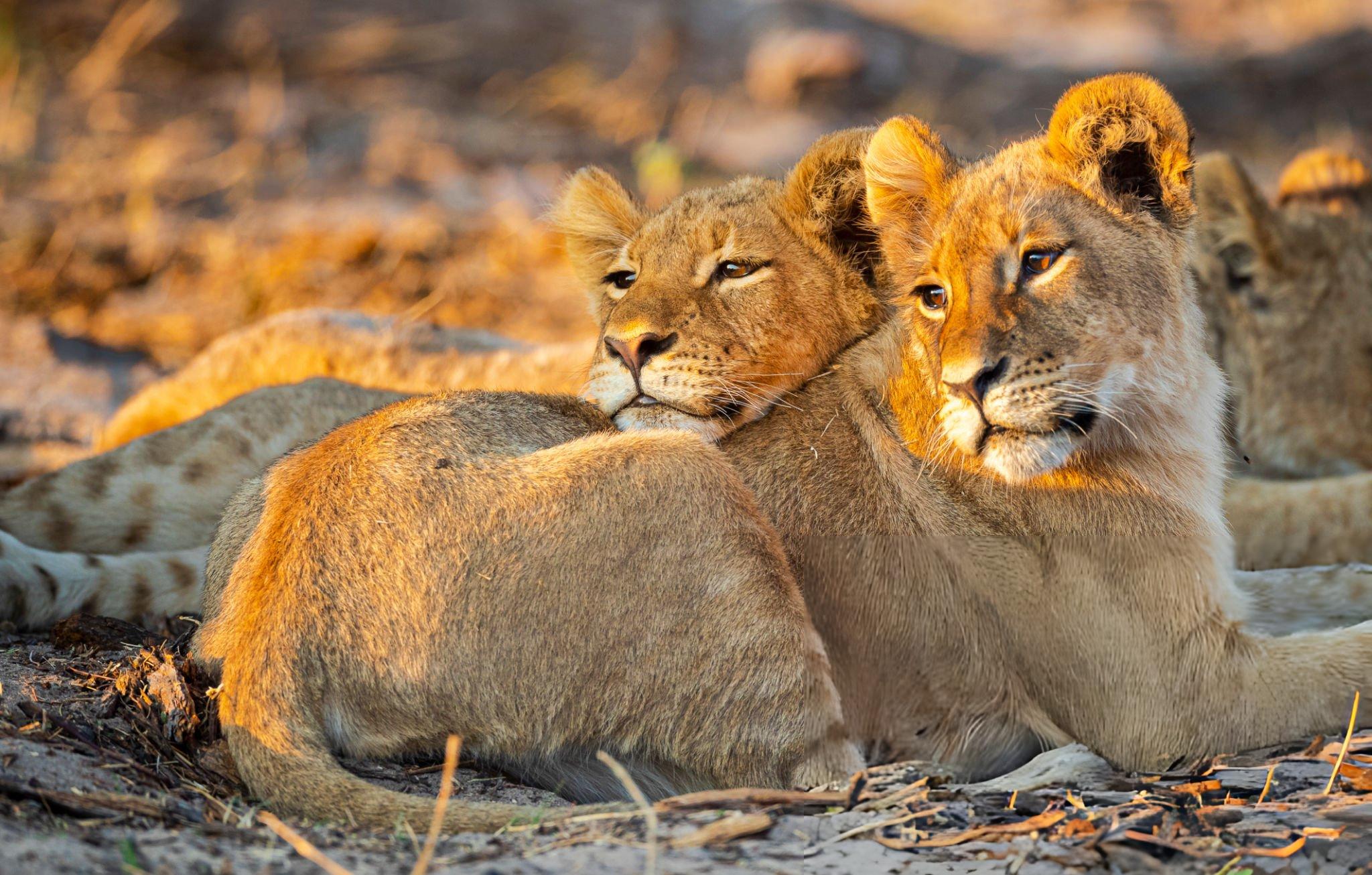
Discover rare animals you can only see in Tanzania, from Zanzibar red colobus monkeys to wild dogs and unique mountain species. Explore unforgettable wildlife adventures with Epic Horizons Adventures.https://www.epichorizonsadventures.com/our-tours/destinations/
The Elusive African Wild Dog: Tanzania’s Most Mysterious Predator
When one thinks of Africa’s legendary carnivores, the iconic lion or sleek cheetah may come to mind first. However, Tanzania — with its sprawling plains, diverse ecosystems, and protected conservation areas — harbors a predator far more elusive, enigmatic, and globally unique: the African wild dog (Lycaon pictus). This special creature is one of the rare animals you can only see in Tanzania in the numbers and environments that support their complex social structure and hunting behavior. In this opening section of our deep-dive into Tanzania’s most extraordinary wildlife, we explore the significance of these remarkable animals, their biology, their social organization, and why Tanzania remains one of the best places on Earth to witness them in the wild.
Before delving deeper, it’s important to understand why wild dogs are so rare and why seeing them is considered a true bucket-list experience for wildlife lovers. Unfortunately, the African wild dog is classified as Endangered on the IUCN Red List, due to habitat fragmentation, human-wildlife conflict, disease, and competition with larger predators like lions and hyenas. Populations have dwindled across much of their historic range. However, Tanzania remains a global stronghold, especially in conservation landscapes such as the Serengeti, Selous (now Nyerere National Park), and Ruaha ecosystems. For travelers seeking authentic wildlife encounters, spotting African wild dogs is an unmatched experience: a blend of rarity, behavior, and raw natural drama.
🐾 Biology and Behavior — What Makes Wild Dogs Unique
African wild dogs differ significantly from other predators in both appearance and behavior. Unlike the striped coat of a tiger or the spotted pattern of a cheetah, wild dogs have patchy, multicolored fur that is unique to every individual. They are highly social animals, living in packs that exhibit extraordinary cooperative hunting strategies. While most large carnivores rely on stealth or ambush, wild dogs are endurance hunters: they run tirelessly over long distances, coordinating their movements with astonishing precision. According to research from National Geographic, packs can take down prey significantly larger than themselves by using teamwork rather than brute force. This sets them apart as one of the natural world’s most efficient hunters.
👉 Learn more: https://www.nationalgeographic.com/animals/mammals/facts/african-wild-dog
Their social structure is equally fascinating. Packs are typically led by a dominant breeding pair, and all members take part in caring for pups. This cooperative care enhances the survival of the young and exemplifies social bonds that are rare among carnivores. In fact, wild dog packs often share food with injured or less successful hunters — a behavior that underscores their interdependence and social complexity.
🌍 Why Tanzania? — Prime Habitat for Wild Dog Sightings
While African wild dogs historically ranged across much of sub-Saharan Africa, today only a few strong populations remain — and Tanzania is home to many of the most reliable. The country’s vast, interconnected conservation areas provide the space these wide-roaming animals need. Tanzania’s protected areas also support abundant prey species, including impalas, gazelles, and wildebeest, which are essential to sustaining healthy wild dog populations.
In the Serengeti, wild dogs take advantage of the seasonal movements of herbivores during the Great Migration, allowing them to hunt cooperatively where prey is concentrated. Meanwhile, in areas like the Ruaha-Rungwa ecosystem, fewer visitors and vast wilderness expanses mean that wild dogs roam freely with minimal human disturbance. Scientists with the WildCRU (Wildlife Conservation Research Unit) emphasize that these connected landscapes are critical for the genetic diversity and long-term viability of wild dog populations.
👉 Explore research: https://www.wildcru.org/research/species/african-wild-dog/
And it’s not just about space — Tanzania’s wildlife management policies and conservation partnerships have played a role in stabilizing some wild dog populations. National parks and game reserves work with NGOs, local communities, and researchers to reduce conflict, monitor packs, and safeguard critical corridors that allow wild dogs to move freely across the landscape.
🧭 The Thrill of the Chase — What It’s Like to See Wild Dogs in the Wild
For many travelers, seeing an African wild dog is more than a sighting; it’s an intimate brush with behavior that few humans ever witness. Imagine spotting a group of lean, mottled canines trotting through golden grass, ears pricked, eyes keenly scanning for opportunity. Then, suddenly, they burst into coordinated motion — tails high, bodies streamlined — as they pursue a fleet-footed gazelle across the plain. The orchestra of movement, rhythm, and teamwork is something that photograph or memory alone struggles to capture.
This moment — often fleeting but unforgettable — is why visits to Tanzania with a focus on wildlife are so special. And if you’re traveling with an experienced operator, the chances of such a sighting increase dramatically. Epic Horizons Adventure we are looking extra miles to make sure that every moment of your safari is tailored toward authentic and ethical wildlife encounters, especially those rare experiences that make Tanzania so iconic.
A successful wild dog sighting often requires patience, expert tracking knowledge, and flexibility. Guides may follow spoor, observe pack movements at dawn or dusk, and use years of experience to predict where these nomadic hunters might appear next. For many enthusiasts, the payoff is worth the effort — wild dog sightings are frequently described as more thrilling than glimpsing more common animals.
📍 Top Places in Tanzania to Spot African Wild Dogs
Here are some of the most reliable Tanzanian destinations for wild dog sightings:
🌿 1. Serengeti National Park
Widely known for the Great Migration, the Serengeti’s mosaic of habitats supports several wild dog packs that follow migratory prey.
👉 Park info: https://www.serengeti.org
🏞️ 2. Nyerere National Park (formerly Selous)
One of Africa’s largest game reserves, marked by vast savannahs and river systems, provides ideal habitats free from heavy tourist traffic.
👉 Park info: https://www.tanzaniaparks.go.tz
🌳 3. Ruaha National Park
With its rugged hills, low human density, and rich prey base, Ruaha is a stronghold for wild dogs and many other rare species.
👉 Park info: https://www.ruahanationalpark.org
🍃 4. Rungwa-Kizigo Wildlife Management Area
An expansive conservation area where wild dogs roam across river valleys and miombo woodlands.
Each destination offers not only the chance to see African wild dogs but also to encounter other rare animals you can only see in Tanzania (which we will cover in later sections).
🐕 Conservation Challenges — Why Wild Dogs Are Still at Risk
Despite Tanzania’s strongholds, African wild dogs continue to face serious threats. Habitat loss due to agricultural expansion, the spread of diseases like rabies and canine distemper, and accidental snaring pose real dangers to pack survival. Human-wildlife conflict is a persistent challenge, especially where livestock grazing overlaps with wild dog territories.
To safeguard these animals, conservationists stress the importance of community involvement. Initiatives that offer vaccination programs, compensate livestock losses, and educate rural communities about the ecological role of wild dogs have shown promise. For example, partnerships between Tanzanian authorities and NGOs play a vital role in maintaining viable wild dog populations.
📌 Final Thoughts — The Wild Dog as a Symbol of Tanzania’s Wilderness
The African wild dog embodies the spirit of Tanzania’s wild heart — resilient, cooperative, and breathtakingly beautiful. For those who embark on safaris with a passion for unique wildlife, the chance to see these animals in their natural habitat is a memory that lingers long after the journey ends. It is an experience that speaks to the power of conservation, the beauty of complex ecosystems, and the thrill of discovery. And for visitors traveling with mindful and experienced operators, that experience transforms from rare opportunity into unforgettable adventure.
Epic Horizons Adventure we are looking extra miles to make sure that you witness these rare animals with expert guides, ethical practices, and responsible tourism standards that benefit wildlife and local communities alike
Zanzibar Red Colobus: The Forest Jewel Found Nowhere Else on Earth
Hidden within the emerald canopies of Zanzibar’s lush coastal forests lives one of Africa’s most unusual and charismatic primates — the Zanzibar red colobus monkey (Piliocolobus kirkii). This striking species, known for its reddish-brown coat, expressive face, and playful social behavior, is endemic to Tanzania and cannot be found living naturally anywhere else in the world. Among the Rare Animals You Can Only See in Tanzania, the Zanzibar red colobus stands out not just for its beauty, but for its fascinating biology, delicate conservation status, and the unique ecosystem it calls home.
Unlike the wide-open savannahs associated with Tanzania’s famous safaris, the Zanzibar red colobus inhabits dense forests and mangrove thickets, especially in Jozani-Chwaka Bay National Park on Unguja Island. This habitat creates an entirely different wildlife experience — one that replaces roaring lions with rustling leaves, bird calls, and the gentle movement of primates leaping gracefully between trees. For travelers who think Tanzania is only about big game drives, encountering the Zanzibar red colobus reveals a quieter, equally magical side of the country’s biodiversity.
🌿 A Primate Unlike Any Other
The Zanzibar red colobus is instantly recognizable. Its coat is a mix of rust-red, black, and white, with a distinctive pale face framed by a crown of longer fur. One of its most curious physical features is the absence of thumbs — an evolutionary trait that actually helps the monkey move more fluidly through treetops. Its long tail acts as a balancing tool, allowing it to make astonishing leaps between branches.
These monkeys are primarily leaf-eaters, or folivores, with a complex, multi-chambered stomach designed to digest tough vegetation. Because of this specialized diet, they are highly dependent on specific forest habitats. They feed on young leaves, shoots, flowers, and unripe fruit, playing a key role in maintaining forest ecology by dispersing seeds and pruning plant growth.
Their social life is equally intriguing. Zanzibar red colobus monkeys live in groups that can range from 20 to over 50 individuals. These troops are structured around several males, numerous females, and their young. Social grooming, playful chasing, and loud communication calls are constant features of daily life. Visitors often describe watching them as similar to observing a lively village community high above the forest floor.
According to the World Wildlife Fund (WWF), the Zanzibar red colobus is considered Endangered, with a population estimated at only a few thousand individuals.
👉 Learn more: https://www.worldwildlife.org/species/red-colobus-monkey
📍 Why Zanzibar Is Their Only Home
Zanzibar’s forests once stretched widely across the island, but today only fragments remain. The largest and most important refuge for the red colobus is Jozani-Chwaka Bay National Park, the only national park in Zanzibar. This protected area includes groundwater forest, mangroves, and coastal thickets — all crucial habitats for the monkeys.
Because the Zanzibar red colobus evolved in isolation on the island, it never developed the same predator awareness seen in mainland primates. As a result, they are unusually calm around humans, allowing for incredible viewing opportunities. However, this also makes them vulnerable to threats like road accidents and habitat disturbance.
Jozani’s conservation programs focus heavily on community involvement. Local villages benefit directly from eco-tourism revenue, creating strong incentives to protect the forest and its wildlife. This model of conservation-through-tourism has helped stabilize red colobus populations over recent decades.
For travelers exploring Zanzibar’s beaches and historic Stone Town, a guided forest walk in Jozani offers a completely different perspective on Tanzania’s natural heritage — one that highlights that Rare Animals You Can Only See in Tanzania are not limited to the mainland savannah.
👉 Park details: https://www.tanzaniaparks.go.tz/national_parks/jozani
🧠 Behavior and Daily Life in the Treetops
A typical day for Zanzibar red colobus monkeys begins at sunrise. Troops move slowly through the forest canopy, stopping frequently to feed. Their leaf-heavy diet means they spend much of their time resting and digesting. Unlike highly active fruit-eating monkeys, red colobus conserve energy between feeding sessions.
Communication is constant. Soft chirps keep group members connected, while louder alarm calls warn of potential danger. Young monkeys engage in energetic play, chasing each other along branches and testing their climbing skills. Mothers are highly attentive, carrying infants on their bellies before transitioning them to riding on their backs as they grow.
Interestingly, these monkeys have been observed eating charcoal from tree stumps — a behavior scientists believe helps neutralize toxins from certain leaves in their diet. This rare self-medicating behavior adds another layer of fascination to their already complex lives.
Because they are so visible and active during the day, sightings are almost guaranteed in Jozani Forest. Walking quietly along boardwalk trails, visitors often find monkeys just a few meters away, completely unbothered by human presence.
🌍 Conservation Successes and Ongoing Challenges
While conservation efforts have improved the outlook for Zanzibar red colobus monkeys, challenges remain. Habitat loss from agricultural expansion, firewood collection, and infrastructure development continues to threaten forest areas. Road mortality is also a significant issue, as monkeys frequently cross between fragmented forest patches.
Conservation organizations, including the Wildlife Conservation Society (WCS), work alongside Tanzanian authorities to monitor populations, restore habitat corridors, and educate communities about the importance of protecting this species.
👉 Conservation work: https://www.wcs.org/our-work/species/red-colobus
Eco-tourism plays a major role in funding these initiatives. Entrance fees, guide services, and conservation donations all help ensure that local communities see tangible benefits from preserving wildlife rather than converting forests to farmland.
When visitors choose responsible tour operators, their trips contribute directly to conservation. Epic Horizons Adventure we are looking extra miles to make sure that your journey supports ethical wildlife viewing, respects local communities, and contributes positively to the protection of endangered species like the Zanzibar red colobus.
✨ What Makes Seeing Them So Special
There’s something deeply moving about standing in a quiet tropical forest, watching a troop of Zanzibar red colobus monkeys go about their daily lives. The experience feels intimate and personal — far removed from the dramatic predator-prey scenes of the savannah. Instead, it’s about subtlety: the rustle of leaves, the gentle sway of branches, the curious gaze of a young monkey peering down from above.
Because this species exists nowhere else, every sighting carries global significance. You are not just observing wildlife; you are witnessing a unique evolutionary story that unfolded over thousands of years on a small island in the Indian Ocean.
For photographers, the setting offers incredible opportunities: dappled sunlight filtering through the canopy, vibrant green backdrops, and expressive animal subjects. For families, it’s an accessible and educational wildlife experience. And for conservation-minded travelers, it’s proof that Tanzania’s biodiversity extends far beyond the Serengeti.
Indeed, encounters like these redefine the meaning of safari and remind us that Rare Animals You Can Only See in Tanzania live in forests, wetlands, mountains, and islands — each ecosystem holding its own irreplaceable treasures.
🧭 Travel Tips for Visiting Jozani Forest
If you plan to see the Zanzibar red colobus, here are a few tips:
- Go early morning or late afternoon for cooler temperatures and active monkeys
- Hire a certified local guide — they know troop locations and conservation rules
- Wear lightweight clothing and insect repellent
- Keep a respectful distance and avoid feeding wildlife
- Combine your visit with a mangrove boardwalk tour nearby
These simple steps ensure a rewarding and responsible wildlife encounter.
And when your journey is arranged with experts who understand Tanzania’s hidden wildlife gems, the experience becomes seamless and meaningful. Epic Horizons Adventure we are looking extra miles to make sure every detail of your adventure — from forest walks to island explorations — connects you with nature in a respectful and unforgettable way.
🌿 A Living Symbol of Zanzibar’s Natural Heritage
The Zanzibar red colobus is more than just a rare monkey; it is a symbol of the island’s ecological identity. Its survival reflects the success of community-based conservation and the power of sustainable tourism. Every visitor who walks through Jozani Forest becomes part of that story — helping ensure that future generations will also have the chance to look up into the trees and see flashes of red fur moving through green leaves.
As we continue exploring more Rare Animals You Can Only See in Tanzania in the next sections, the Zanzibar red colobus reminds us that rarity is not only about remoteness or danger. Sometimes, it’s about fragility, uniqueness, and the quiet beauty of life found nowhere else on Earth.
Giraffes and the Legendary Big Five of Tanzania
Tanzania is world-famous for its sweeping savannahs and dramatic wildlife spectacles, but beyond the Great Migration lies another powerful draw for safari lovers: the chance to encounter giraffes and Africa’s iconic Big Five in landscapes that feel timeless and untamed. While lions roar across many African countries and elephants roam several regions of the continent, the scale, density, and ecological drama found here make these encounters uniquely powerful. Among the broader story of Rare Animals You Can Only See in Tanzania, the Masai giraffe and Tanzania’s thriving Big Five populations represent a cornerstone of the country’s global wildlife reputation.
From the golden plains of the Serengeti to the baobab-dotted wilderness of Tarangire and the vast remote south in Nyerere National Park, Tanzania offers some of the best places on Earth to observe these animals behaving naturally in immense, protected ecosystems.
🌿 The Masai Giraffe — Tanzania’s Towering Icon
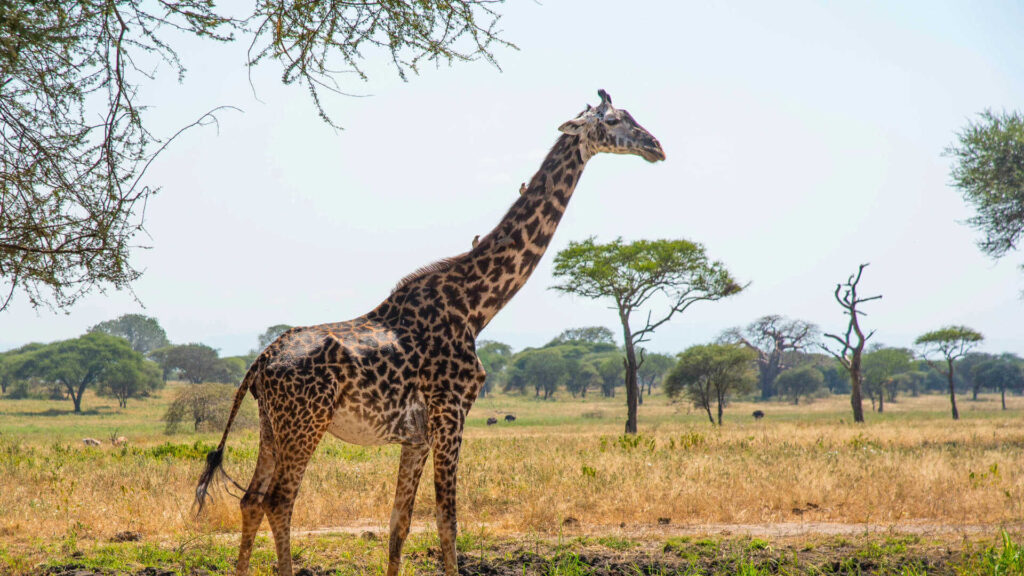
The giraffes most commonly seen in Tanzania belong to the Masai giraffe (Giraffa camelopardalis tippelskirchi), the largest giraffe subspecies and one of the most visually striking. Their jagged, vine-like patch patterns set them apart from other giraffe populations in Africa. Tanzania holds one of the biggest remaining populations of this subspecies, making sightings not only common but spectacular.
Watching a giraffe move across the savannah is like seeing nature in slow motion. Despite their towering height — reaching up to 5.5 meters (18 feet) — they move with surprising grace. Their long necks allow them to browse leaves from acacia trees that other herbivores cannot reach, giving them a unique ecological role as high-level browsers.
Giraffes are social but loosely organized, often seen in shifting groups called “towers.” Calves are especially captivating, wobbling on impossibly long legs within hours of birth. Predators such as lions pose a risk to young giraffes, but adults can deliver powerful defensive kicks capable of injuring or killing a lion.
Tanzania’s open landscapes make for excellent giraffe photography, especially at sunrise or sunset when their silhouettes stretch dramatically across the horizon. These moments remind travelers that even common species here feel extraordinary due to the wild scale of their environment.
🦁 The Lion — King of the Serengeti
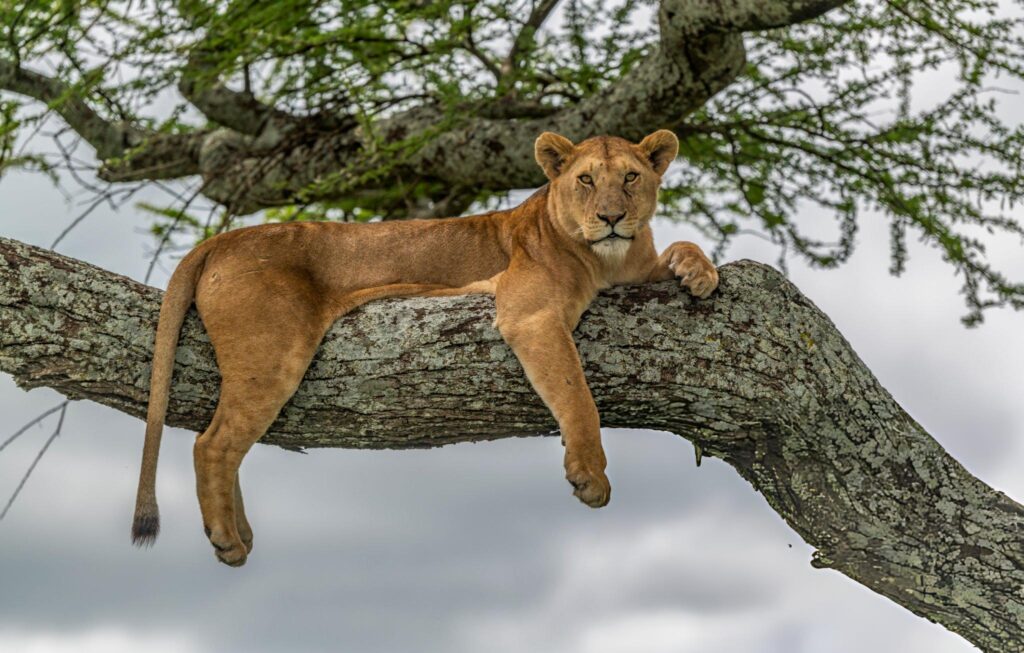
No Big Five list begins without the lion. Tanzania hosts one of the largest lion populations in Africa, particularly within the Serengeti ecosystem. Here, prides thrive thanks to abundant prey and vast territories.
Serengeti lions are known for their impressive pride structures, cooperative hunting strategies, and dramatic territorial battles. Watching lionesses coordinate a hunt across open plains is a raw demonstration of teamwork and survival. Male lions, with their heavy manes, patrol boundaries and defend cubs from rival males.
Unlike in smaller reserves elsewhere, Tanzania’s lions roam enormous natural ranges. This allows visitors to see more authentic behaviors rather than animals confined to limited habitats. It’s one reason safaris here feel less like a zoo visit and more like stepping into a wildlife documentary.
🐘 The African Elephant — Giants of Tarangire and Nyerere
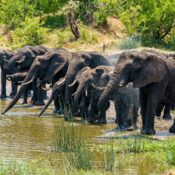
Tanzania is also a sanctuary for the African savannah elephant, the largest land animal on Earth. Parks like Tarangire National Park are famous for massive elephant herds, sometimes numbering in the hundreds during the dry season.
Elephants are deeply intelligent and emotional animals, with complex family structures led by matriarchs. Watching a herd move together — calves shielded in the center, adults communicating through low rumbles — is both humbling and unforgettable.
In southern Tanzania’s Nyerere National Park, elephants wander through remote river systems and woodlands, often without another vehicle in sight. These quieter encounters emphasize the wilderness feeling that defines Tanzanian safaris.
🐆 The Leopard — Master of Stealth
Leopards are the most elusive of the Big Five, but Tanzania offers excellent chances of spotting them, especially in the Serengeti’s riverine forests and rocky kopjes. These solitary cats are masters of camouflage, often seen draped over tree branches with a fresh kill safely stored away from scavengers.
Patience is key when searching for leopards. Skilled guides look for alarm calls from baboons or antelope, which often signal a leopard’s presence. Night drives in certain parks can also reveal these secretive predators on the move.
A leopard sighting is often described as magical — a brief glimpse into a hidden world of stealth, patience, and power.
🦏 The Black Rhino — A Rare Treasure
Among Tanzania’s most protected animals is the black rhinoceros, critically endangered due to poaching. Though once widespread, rhinos are now found only in carefully monitored areas such as the Ngorongoro Conservation Area and parts of the Serengeti.
Seeing a rhino in the wild is a rare privilege. These prehistoric-looking giants are surprisingly agile and mostly solitary. Conservation efforts in Tanzania focus heavily on anti-poaching patrols and habitat protection to help populations slowly recover.
Because sightings are less frequent, they often become the most treasured memory of a safari — a reminder of both nature’s fragility and resilience.
🐃 The African Buffalo — Power in Numbers
Often underestimated, the African buffalo is one of the most dangerous animals in Africa. Found in large herds across Tanzania’s parks, buffalo are unpredictable and fiercely protective of their group.
Their presence also plays a crucial ecological role. Grazing herds shape vegetation patterns and provide prey for lions. Massive gatherings near water sources during the dry season create dramatic wildlife scenes, often with predators lurking nearby.
🌍 Why Tanzania Is Special for Big Five Safaris
Many African countries offer Big Five safaris, but Tanzania stands apart due to the size of its protected areas and the authenticity of its ecosystems. Animals roam freely across interconnected landscapes, and human development inside parks is minimal.
This scale means wildlife interactions unfold naturally. Predator-prey chases, elephant migrations, and seasonal changes all occur as they have for centuries. These factors elevate Tanzania into the top tier of safari destinations globally.
When travelers explore these wildernesses with experienced guides, every drive becomes a lesson in ecology and conservation. Epic Horizons Adventure we are looking extra miles to make sure your safari is not just about ticking animals off a list, but about understanding their roles in a living ecosystem.
📸 The Emotional Impact of Seeing Giants in the Wild
There’s something deeply moving about locking eyes with a giraffe as it calmly chews acacia leaves, or hearing a lion’s roar echo across the plains at dusk. Standing a safe distance from a wild elephant herd as they drink at a river crossing reminds visitors how small humans are in the grand web of life.
These encounters stay with people long after they return home. They inspire conservation awareness and a deeper appreciation for wild places.
For many travelers, Tanzania becomes more than a destination — it becomes a turning point in how they see the natural world.
And while the Big Five are globally famous, seeing them here, in these landscapes, alongside species found nowhere else, adds depth to the journey through Rare Animals You Can Only See in Tanzania.
🧭 Best Parks for Giraffes and the Big Five
- Serengeti National Park – Lions, leopards, elephants, buffalo, and occasional rhinos
- Ngorongoro Crater – One of the best places to see all Big Five in a single day
- Tarangire National Park – Huge elephant herds and iconic baobab scenery
- Nyerere National Park – Remote wilderness with elephants, lions, and buffalo
- Ruaha National Park – Rugged landscapes and strong predator populations
Each location offers a different flavor of safari, from classic open plains to remote river valleys.
With the right planning and expert local knowledge, travelers can combine several of these parks into a seamless itinerary. Epic Horizons Adventure we are looking extra miles to make sure every route, lodge, and game drive maximizes your chances of meaningful wildlife encounters while supporting responsible tourism.
🐾 A Living Legacy of Africa’s Wild Heart
Giraffes and the Big Five represent more than just a checklist — they symbolize Africa’s enduring wilderness. Tanzania remains one of the last places where these animals thrive at scale, moving through ecosystems that still function as nature intended.
As we continue exploring more Rare Animals You Can Only See in Tanzania in the next sections, remember that even the most famous species feel rare and extraordinary when seen in the right place — under endless skies, on untamed plains, where the wild still writes its own story.
Hidden Mountain and Forest Species Found Only in Tanzania
Beyond the open savannahs and famous safari circuits lies another Tanzania — one of mist-covered mountains, ancient rainforests, and isolated ecosystems that have evolved in remarkable ways over millions of years. These remote habitats are home to species so rare and localized that many people — even seasoned wildlife travelers — have never heard of them. This lesser-known side of the country strengthens the story of Rare Animals You Can Only See in Tanzania, proving that the nation’s biodiversity stretches far beyond lions and elephants.
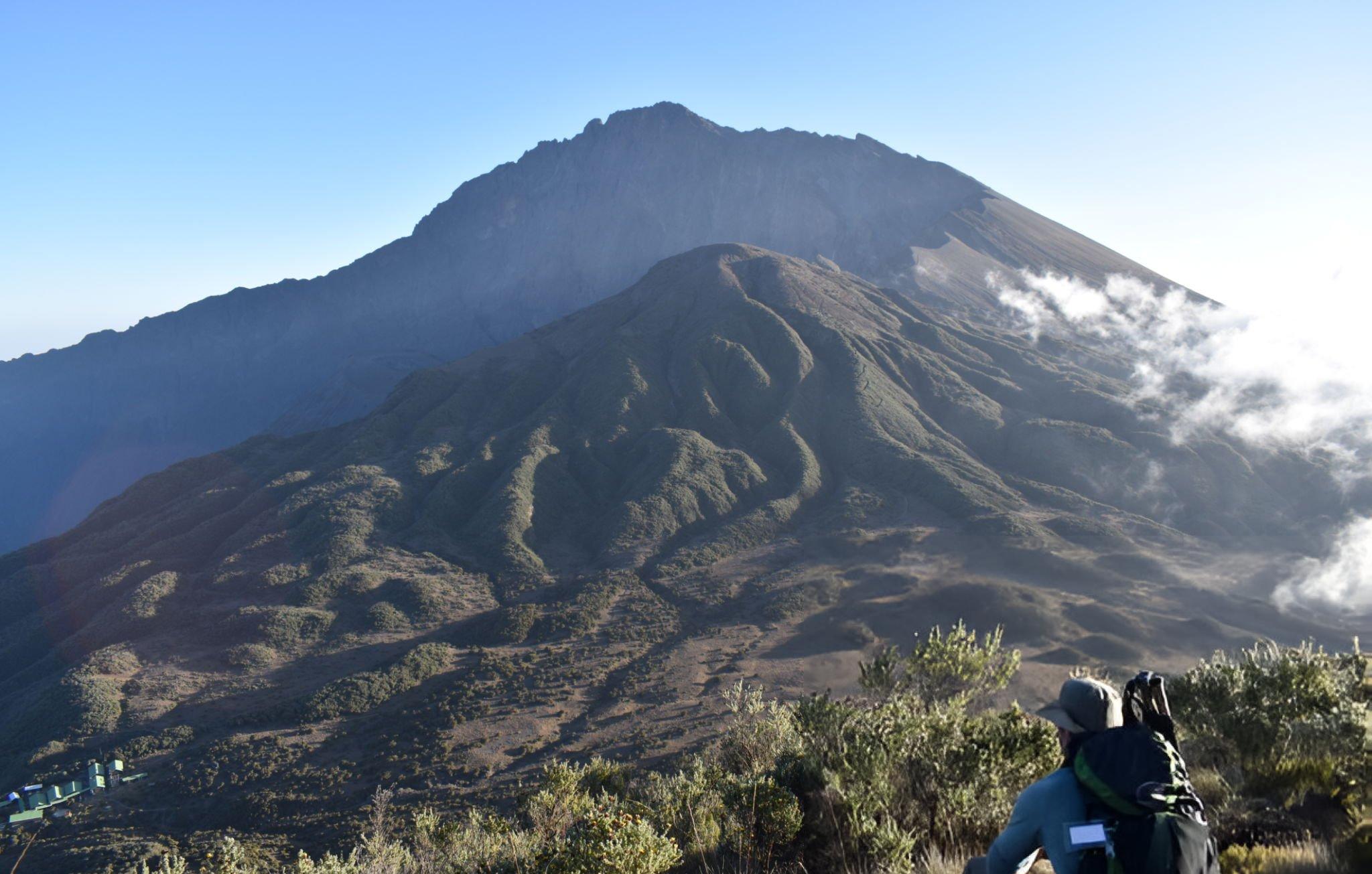
In the Eastern Arc Mountains and Southern Highlands, dense forests cling to steep slopes where clouds drift through treetops and waterfalls carve through green valleys. These mountains are often called the “Galápagos of Africa” because of their extraordinary number of endemic species — animals found nowhere else on Earth. Among them are rare monkeys, secretive antelopes, and elusive forest creatures that represent some of Africa’s most important conservation treasures.
🐒 The Kipunji — Africa’s Rarest Monkey
One of the most astonishing wildlife discoveries of the 21st century happened right here in Tanzania. In 2003, scientists identified a previously unknown primate species in the Southern Highlands. Named the kipunji (Rungwecebus kipunji), or highland mangabey, it is one of the world’s rarest monkeys.
The kipunji lives only in a few isolated forest patches in the Udzungwa Mountains and Mount Rungwe areas. With a distinctive honking call, long brown fur, and expressive face, the kipunji stands apart from other African monkeys. Genetic studies revealed it was so unique it required classification in its own genus — an extraordinary event in modern science.
Unfortunately, fewer than a few thousand individuals remain, and habitat fragmentation poses a serious threat. Forest corridors that once connected kipunji populations have been reduced by agriculture and logging, isolating groups and limiting genetic diversity.
Conservation groups are working with local communities to restore forest corridors and protect remaining habitats. Efforts like these show how Tanzania plays a crucial global role in preserving species found nowhere else.
👉 Learn more: https://www.edgeofexistence.org/species/kipunji/
Seeing a kipunji in the wild is extremely rare and usually limited to scientific expeditions, but its story highlights why Tanzania’s mountain forests are internationally important biodiversity hotspots.
🌿 Udzungwa Red Colobus — A Monkey of the Misty Forests
Another primate found only in Tanzania is the Udzungwa red colobus monkey (Piliocolobus gordonorum). Unlike its Zanzibar cousin, this red colobus lives high in the canopy of the Udzungwa Mountains’ rainforests.
These monkeys have striking reddish fur on their backs and black-and-white facial markings. Highly arboreal, they rarely descend to the ground. Their diet consists mainly of leaves, making them essential to forest ecology as seed dispersers and vegetation regulators.
The Udzungwa Mountains National Park provides critical protection for this species. Hikers trekking through the forest trails sometimes hear their rustling movements or see groups leaping between treetops. Because the forest is dense and visibility limited, sightings feel magical and fleeting — a reminder of how wild and untouched these habitats remain.
The Udzungwa ecosystem is considered one of the most biologically important forests in Africa. According to conservation scientists, its long-term stability as a rainforest — even during past climate shifts — has allowed ancient species to survive and evolve in isolation.
👉 Park information: https://www.tanzaniaparks.go.tz/national_parks/udzungwa
🦌 Abbott’s Duiker — The Ghost Antelope of the Highlands
Deep within Tanzania’s montane forests lives a shy and rarely seen antelope known as Abbott’s duiker (Cephalophus spadix). This medium-sized forest antelope has a dark brown coat, lighter underparts, and short, backward-curving horns.
Abbott’s duiker is so elusive that for many years it was thought to be nearly extinct. Camera trap studies in the Udzungwa and Kilimanjaro forests have since confirmed small surviving populations, but sightings remain extremely rare.
These antelopes prefer dense undergrowth and are mostly active at dawn and dusk. Their secretive nature helps them avoid predators but also makes population monitoring difficult. Habitat loss and hunting have contributed to their endangered status.
Protecting forest habitats is essential not just for large animals but also for species like Abbott’s duiker that depend entirely on undisturbed vegetation. Their presence indicates a healthy, functioning forest ecosystem.
🐘 Forest Elephants? No — But Unique Forest Ecosystems
While Tanzania is known for savannah elephants, its mountain forests host smaller, more elusive elephant populations that behave differently from their plains counterparts. These elephants navigate steep terrain and dense vegetation, often moving silently through forest corridors.
Their ecological role includes creating forest clearings, dispersing seeds, and shaping vegetation patterns. Even when unseen, their impact on the forest is evident in broken branches and well-worn pathways.
These highland ecosystems demonstrate how Tanzania’s wildlife diversity extends vertically as well as geographically — from coastal mangroves to alpine zones.
🌍 Why Mountain Biodiversity Matters Globally
The Eastern Arc Mountains are among the oldest mountain ranges in Africa. Because they have remained ecologically stable for millions of years, species here have had time to evolve in isolation. This results in high levels of endemism — plants, birds, reptiles, and mammals that exist nowhere else.
Scientists consider these mountains a top global conservation priority. Protecting them helps safeguard genetic diversity that cannot be replaced. The forests also provide water sources for millions of people, regulate climate, and store significant carbon, making their protection vital for both biodiversity and human well-being.
Travelers who venture into these regions experience a completely different side of Tanzania. Instead of wide-open game drives, they explore hiking trails, waterfalls, and bird-filled canopies. This slower, immersive style of travel reveals another layer of Rare Animals You Can Only See in Tanzania, hidden in cool mountain air and shadowy forest paths.
🧭 Visiting Tanzania’s Mountain Forests
While some species like the kipunji are rarely accessible to tourists, parks such as Udzungwa Mountains National Park offer guided treks where visitors can experience rainforest biodiversity firsthand. Activities include:
- Forest hikes to waterfalls
- Birdwatching for endemic species
- Guided primate tracking
- Cultural visits to local mountain communities
These experiences complement traditional safaris and add depth to a Tanzanian itinerary.
Choosing experienced guides ensures minimal environmental impact and maximizes learning opportunities. Epic Horizons Adventure we are looking extra miles to make sure your journey includes not only iconic wildlife but also these hidden ecosystems that many travelers overlook.
✨ The Magic of the Unseen
There’s a different kind of thrill in searching for wildlife that doesn’t always reveal itself easily. The rustle of leaves overhead, distant monkey calls, or fresh hoofprints on a muddy trail build anticipation and connection to the environment.
Even when animals remain hidden, the forest itself feels alive. Giant trees, colorful fungi, and shafts of sunlight filtering through mist create an atmosphere that feels almost prehistoric.
For conservation-minded travelers, these forests are a reminder that protecting biodiversity means valuing both the famous and the obscure. Tanzania’s reputation rests not only on its lions and elephants but also on the quiet survival of species that most of the world will never see.
Indeed, the story of Rare Animals You Can Only See in Tanzania would be incomplete without acknowledging these mountain and forest dwellers — species that evolved in isolation and depend entirely on the preservation of fragile habitats.
🌿 A Future Worth Protecting
The survival of Tanzania’s endemic forest species depends on continued conservation investment, sustainable tourism, and community engagement. When forests are protected, wildlife thrives, water sources remain clean, and local livelihoods improve through eco-tourism.
By visiting responsibly and supporting conservation-focused operators, travelers become part of this positive cycle. Epic Horizons Adventure we are looking extra miles to make sure every adventure contributes to protecting the landscapes and wildlife that make Tanzania one of the most biologically rich countries on Earth.
As we move into the final section, we’ll explore aquatic and wetland species that add yet another dimension to Tanzania’s extraordinary natural heritage — proving once again that the diversity of Rare Animals You Can Only See in Tanzania extends from mountaintops to river deltas.